


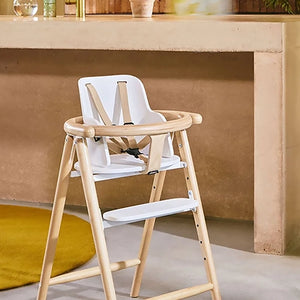
Baby's awakening in the first months
The right conditions
A baby needs their parents to survive, but also to grow up well! It is through interacting with your child that they will develop their ability to move, grasp objects and discover the outside world. Your baby needs a safe environment adapted to their motor development. And yes, that means you'll need to hide your vases, lock your cupboards — at least for a while…
 The must-haves for a baby who is awakening to the world are:
- The play mat: a large, soft play surface that insulates from the cold.
- The arch: to stimulate their vision and motor skills. The arch also allows your baby to be relatively "independent" as they don't need you to pick up toys that might fall.
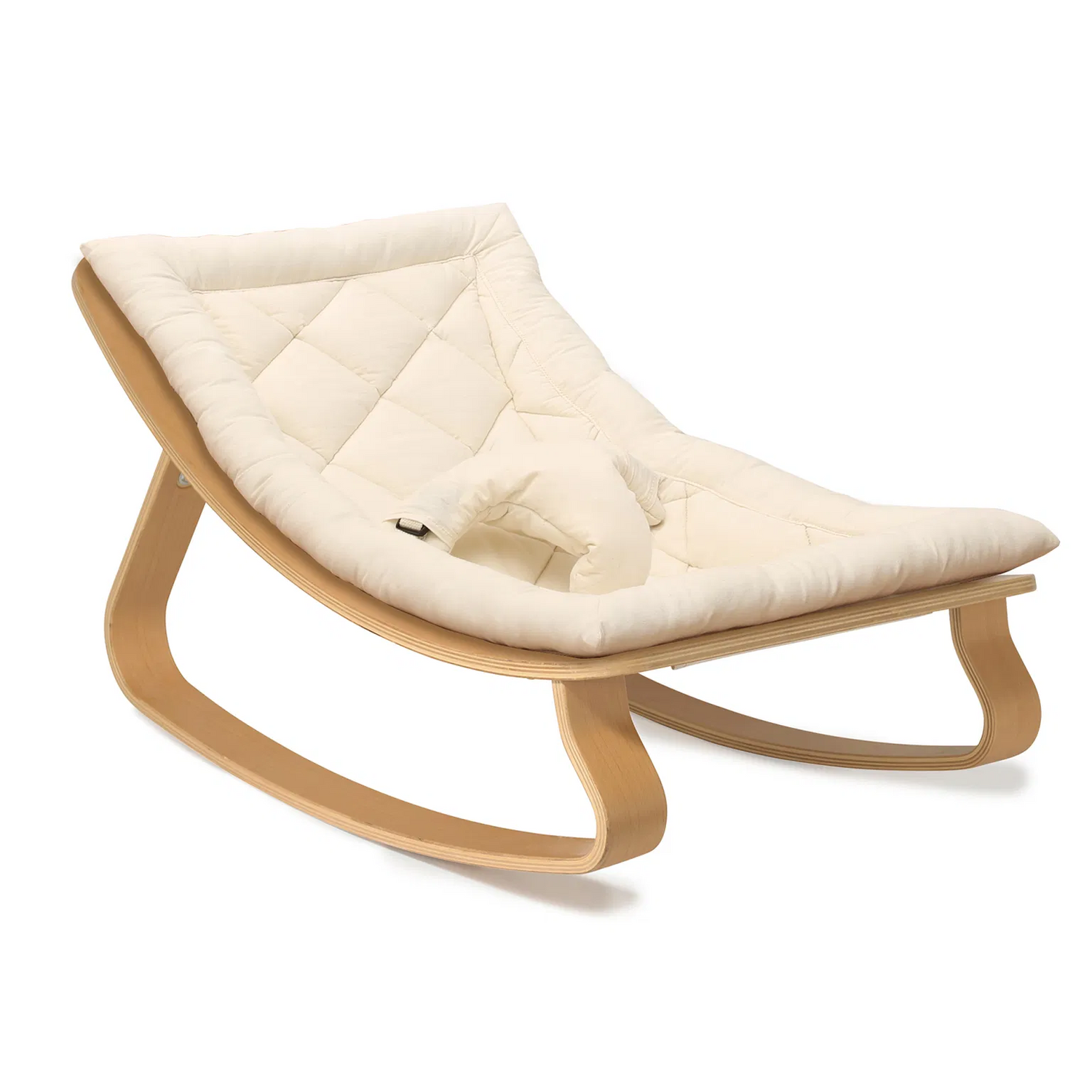
- The bouncer: a little chair for observing the world around them. Handy when you need to go about your tasks, or even to start feeding them at the very beginning of weaning.
From 1 to 4 months
In the first month, your baby gently awakens and becomes aware of their body. Their vision is still blurry but they can distinguish colours, even those of a play mat they might be lying on. They listen a lot and recognise their parents' voices, which they heard so often in the womb. You can play and make vocalisations, whispers, onomatopoeia (you know, when you look a little gaga talking to your baby?!), smiles, coos, caresses… when they are in your arms, lying on their back on their play mat, in the bouncer, during bath time or during a nappy change.
The goal? To interact, introduce them to new sensations and build a bond with them.
At this age, your baby gets tired very quickly. They can look around, but it exhausts them. If they turn their head away, it's not that they don't want to see anymore, but that they need rest. So don't hesitate to put them back in their bassinet or their baby bed for a well-deserved nap. Of course, when your baby is hungry, they are also less receptive. You'll quickly learn to decode these signs, which it's important to respect so as not to overstimulate them… It would be a shame to miss nap time after all!
From around 2–3 months, you can help strengthen their head control (super important!) by occasionally placing them on their tummy on their play mat to play with them. They lift their head, they start to smile… Soon enough, we promise, they'll give you a poker face worthy of Al Pacino!

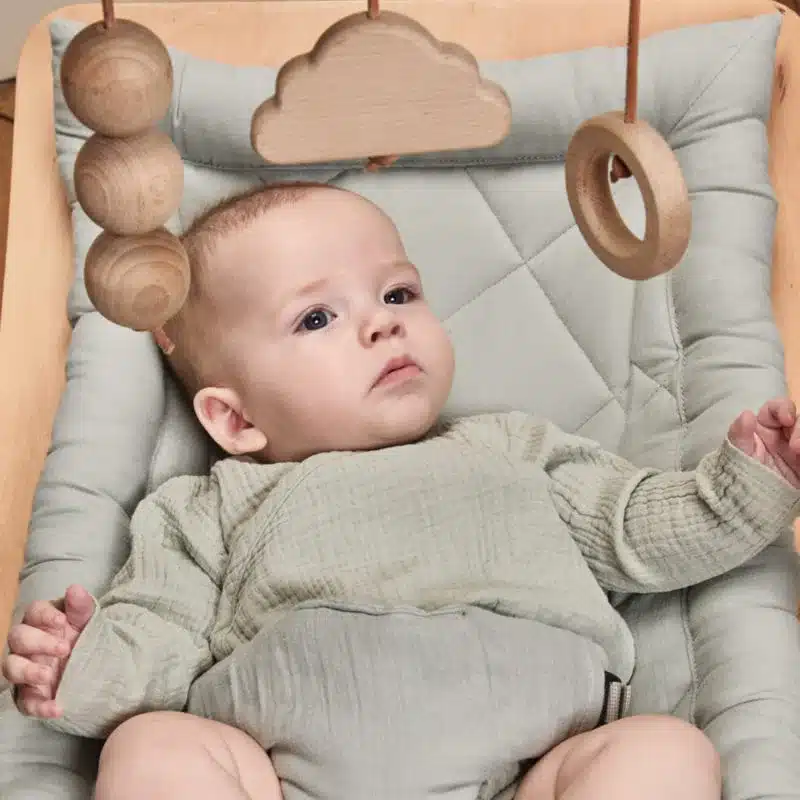
From 4 to 8 months
Your baby is starting to use their hands.
Time for the arch, rattles, all those toys that make noise, can be grabbed, put in the mouth and are terribly interesting!
Your child also discovers the world through taste and their mouth. Some babies even suck… their feet. No need to worry — let them do it, they're having a great time! Vary the positions for your baby on their play mat. On their back or on their tummy to train their head control. Are you busy? Place your baby in their bouncer on the floor and let them watch you. Place the arch above them during playtime. The arch has a great advantage for both of you: toys that finally don't fall and don't need to be picked up! It also seems that washing machines fascinate some babies…
Finally, this is the great discovery of their own body. Accompany this learning journey by multiplying the guessing games: who does this little nose belong to, these little hands, these little legs? And as in the first months, make sure to respect their moments of tiredness by regularly leaving them in peace.
Want to go further? We recommend the following reading:
- Development and advice
- Born and growing
- The book: Baby, tell me who you are
- The Podcast episode La Matrescence: Dr Catherine Gueguen – Understanding your child through neuroscience


