

Baby high chair: when is your baby really ready, beyond the six-month rule?
There’s no magic age for putting your baby in a highchair: it’s your child’s ability to sit upright, not a number in their health record, that determines the right time. In practice, this milestone often coincides with the start of introducing solid foods, at around 6 months, but it usually becomes more clearly established between 7 and 8 months, depending on your child’s development. A few clear signs you can observe at home are enough to help you decide with confidence.

Why isn't age alone enough to decide?
A single number never tells the whole story of your baby's development: their body gives the real starting signal. Before thinking about a high chair, it is better to look for a few motor-development milestones, which are far more reliable than a theoretical age. Can your child hold their head upright without effort, even when moving about? Does their back stay stable, without rounding or tipping to one side? Can they sit for a few moments with light support, without slumping forwards?
Taken together, these three signs indicate that your baby's trunk muscles are ready for sitting for longer periods. A baby who cannot yet sit unaided is simply not ready, however much you want them to join you at the table. For now, a lying or reclined position is gentler on their still-developing back. Let their motor development, rather than the calendar, guide your decision, so mealtimes are relaxed and your baby is genuinely comfortable in their seat.

4 signs your baby is ready for a high chair
Four clear signs can tell you whether your child is ready:
- They can sit unaided. On your lap or on the floor, your baby can keep their balance for a few moments without tipping over or slumping. If they still wobble like a little roly-poly toy, it is better to wait: finding their balance takes all their energy, leaving little for the meal.
- They can hold their head upright without it tipping. If their chin drops forwards as soon as they get tired, sitting for longer periods is not yet comfortable for them.
- Their back does not round. A back that stays generally straight, even after a few minutes, indicates that their muscles are developed enough to support their upper body unaided.
- They show an interest in the table. Your baby watches what you do, reaches towards objects and seems curious about the high-chair tray: this is often a sign that they are ready, mentally as well as physically, to join family meals.
If even one of these signs is not there yet, there is no need to worry: every child develops at their own pace, and waiting a few weeks does not change what matters most — your baby's comfort and safety when seated.

Sitting upright: how to check your baby's readiness yourself
A quick two-minute test at home can often clear up any doubts without waiting for someone else's opinion. Sit your child on your lap and look for four simple things: does their head stay steady without tipping forwards? Does their back stay generally straight rather than constantly rounding? Can they sit briefly with little support from you? And above all, can you feel their trunk muscles actively working, as though they are helping to keep themselves balanced?
If the answer to most of these questions is still no, it is better to wait. Time on the floor and seated play, with your arms around your baby to reassure them, are more than enough to help them progress at their own pace. A baby who slumps to the side or folds forwards in a high chair is not really sitting up; they have simply been placed there, which is uncomfortable for them and tiring for you.
Repeating this check a few days later if needed will give you a much more reliable answer than a suggested age printed on the packaging. Every child develops motor skills on their own timetable, and what you gently observe at home should guide your decision.
What to do before your baby can sit up: temporary alternatives
At four or five months, your baby is discovering the pleasure of sitting up in your arms, and many parents are already wondering how to include them in family meals. Before a high chair becomes appropriate, several options can help you wait comfortably:
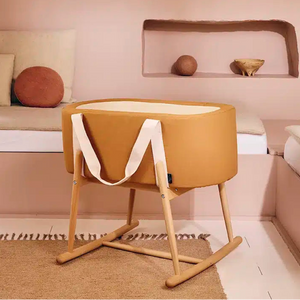
- The newborn seat for a high chair is suitable for babies from birth to six months. The Newborn seat fits easily onto high chairs designed to accommodate it. Its snug design, created with comfort and safety in mind, lets your baby eat, rest or spend time with you in comfort.
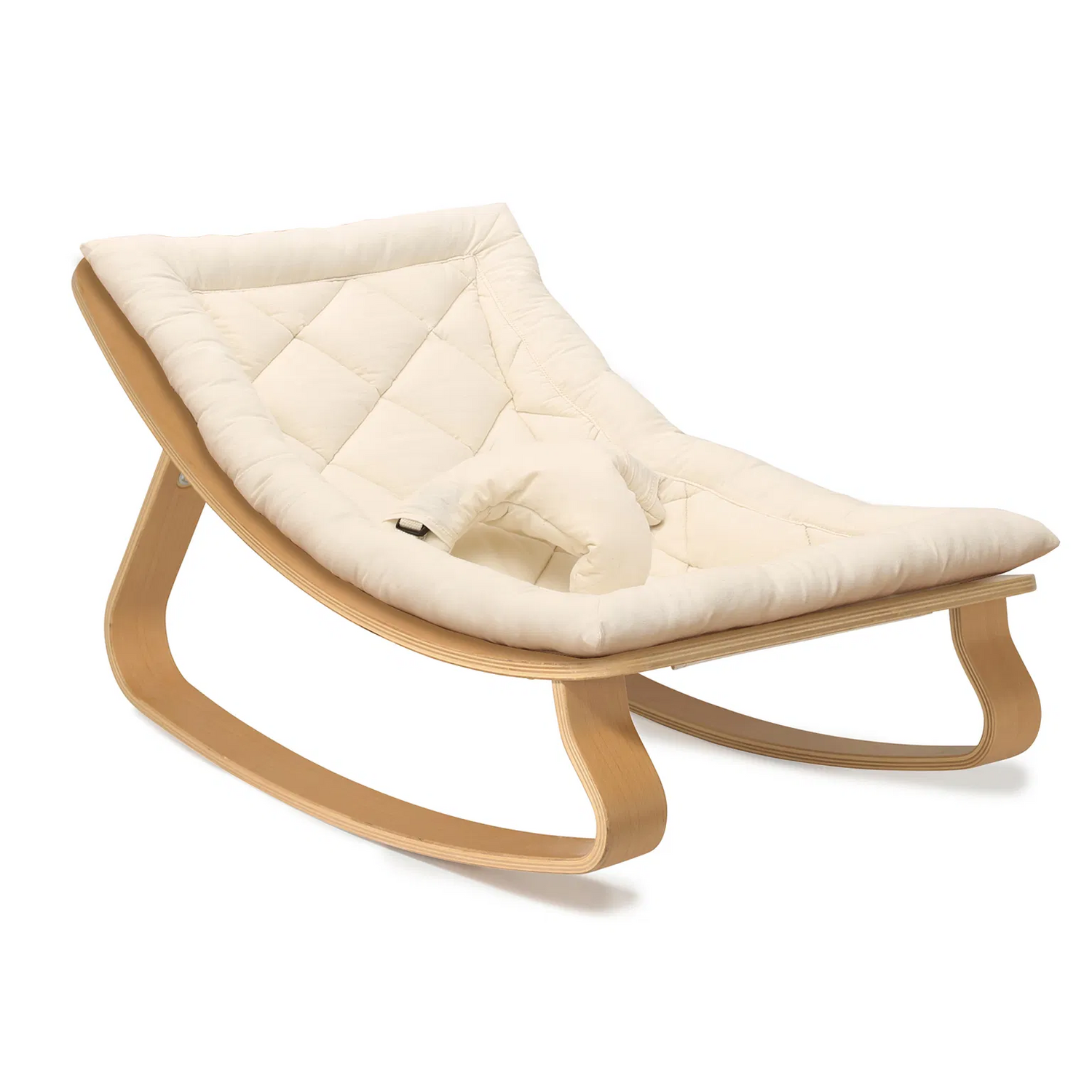
- A baby bouncer, placed on the floor and never on a table, offers a reassuring reclined position for awake time or a light nap close to you. Some adjustable reclining models can also be used for the very first meals while your baby's back muscles develop.
- Babywearing, in a sling or baby carrier, lets you keep your baby close while you cook or eat, without waiting until they can sit unaided.
- A nursing pillow can provide occasional support in a semi-seated position for brief moments of looking around, rather than for a full meal.
These alternatives are not intended to speed up your child's development: they simply support them through this in-between stage until they can sit upright consistently.

Weaning and high chairs: related milestones, not necessarily simultaneous
Many parents automatically link a baby's first spoonfuls of vegetables with putting them in a high chair, as though the two must happen on the same day. In fact, they are related but separate milestones. Weaning generally begins at around six months, often on a paediatrician's advice. Moving to a standard baby high chair depends above all on motor development: being able to sit unaided, with a sufficiently strong back and an upright head, without outside support. In practice, this often happens a little later, between seven and eight months.
So there is nothing unusual about offering the first spoonfuls of purée while your baby is on your lap, in a reclining bouncer or with the help of a baby support, until they can sit upright confidently. Putting them in a high chair before their back and trunk muscles are strong enough can instead make mealtimes less comfortable and even create unnecessary stress for both of you.
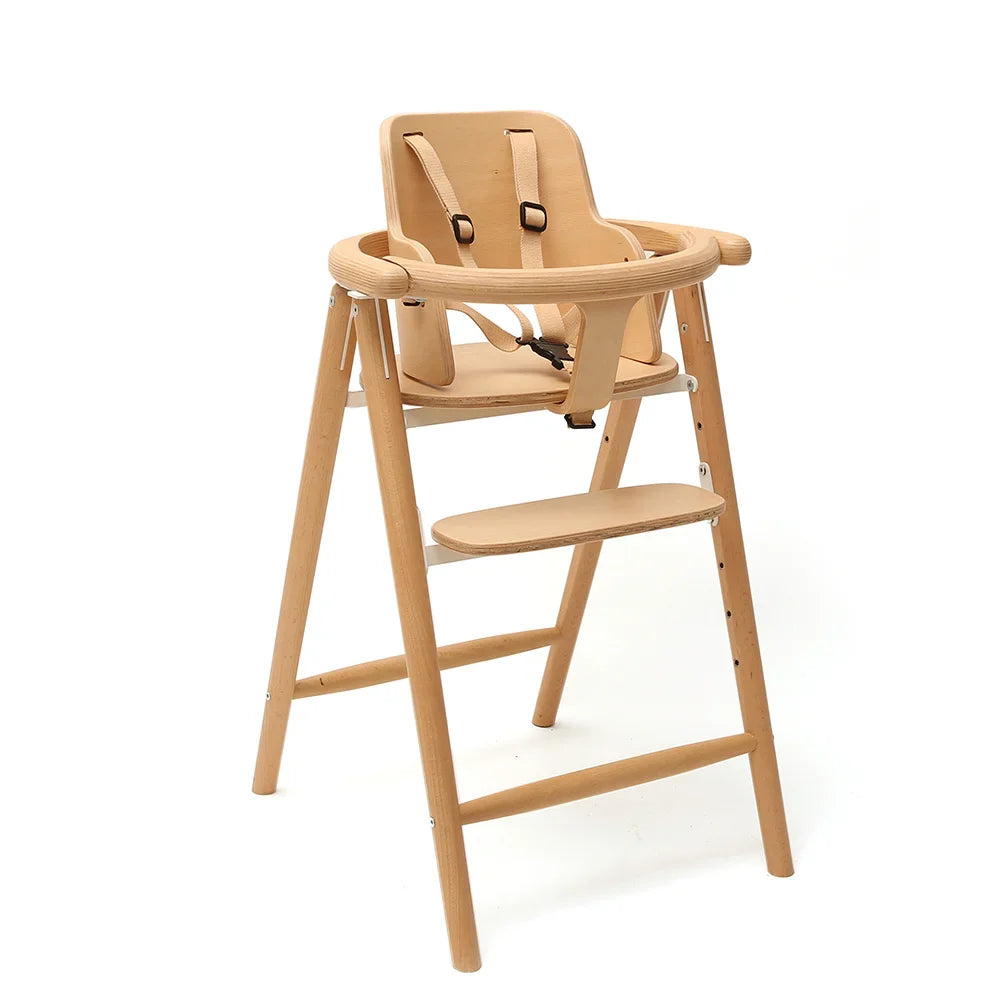
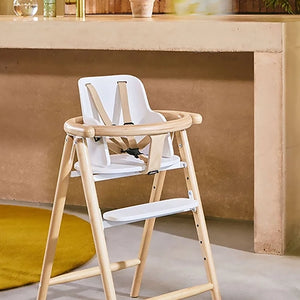
At the other end of the journey, there is the opposite question: when should you stop using the high chair? It generally serves your child until around age three, when they become independent enough to use a regular chair, perhaps with a booster seat during the transition. Between these two milestones, the best guide is to watch your child for signs: steady sitting, a head that no longer tips forwards and genuine curiosity about what is happening at the table. This helps you make a choice that is both lasting and reassuring. It is also why an adjustable chair designed to last for several years makes sense when you want to respect your child's pace.

Frequently asked questions
Can a four- or five-month-old baby use a high chair? No, unless they can already sit upright with firm support, which is rare at this age. A baby bouncer placed on the floor or some time on your lap is a better choice.
Do you need to wait until weaning begins before putting your baby in a high chair? Not necessarily: weaning can begin before your baby can sit up confidently, with them in a reclined position or on your lap.
How can I tell if my baby is ready without waiting for medical advice? Watch at home to see whether they can hold their head up, keep their back stable and sit for a few moments with little support.
Until what age do children use a high chair? Generally until around age three, depending on their independence and motor skills, before gradually moving to a regular chair or a booster seat.


