

Can you let baby sleep in their baby rocker? What you need to know before using a Charlie Crane baby rocker
Let baby sleep in a bouncer? The answer is clear: a baby bouncer remains a space for daytime play and relaxation, never a place to sleep. Discover how to safely use a Charlie Crane baby rocker during the day.

Can you let baby sleep in their baby rocker? What you need to know before using a Charlie Crane baby rocker
No, a baby should never sleep in their baby rocker: this is the clear answer to a question many parents ask. A baby rocker remains a space for daytime stimulation and relaxation, never a place for sleep; sleeping must always be done flat on the back, in a suitable cot or crib.
Sleeping in a baby rocker: what current childcare guidelines recommend
On this specific point, current childcare guidelines agree: a baby must never sleep in their baby rocker, neither for a nap nor for the night. The baby rocker is designed for supervised awake time, not for sleep. Its semi-seated or semi-reclined position can obstruct an infant's breathing, particularly if their head tilts forward while falling asleep—a natural relaxation of muscle tone that becomes risky in a position not designed to support it.
Only a flat, firm surface, such as a cot or crib, provides the recognised conditions for safe sleep, at any age, right from birth. The baby rocker, however comfortable and well-designed it may be, is not intended to replace this sleep space: it remains a spot for occasional rest and sharing daily moments, never a place for prolonged sleep, even when baby easily drifts off after a feed or a quiet moment.
If the infant falls asleep in their baby rocker, the reflex to adopt is simple:
- delicately transfer them to their cot as soon as possible;
- never let them spend the night or an entire nap in it;
- keep the baby rocker in an adult's field of vision at all times.
It is this gentle yet constant vigilance that allows you to enjoy the baby rocker with peace of mind, without misusing it.
Why is a baby rocker not designed as a place for sleep?
A bouncer and a baby bed serve two very distinct purposes. The bouncer offers a semi-reclined position, slightly angled: it is suited to play, activity, and observing the surrounding world while parents' hands are occupied elsewhere. This incline, designed for comfort during alert phases, was never intended to accommodate a sleeping baby.
A sleeping infant needs a flat, firm surface, on their back, so that their airways remain completely clear. In a baby rocker, even a high-quality one, the head can tilt forward once muscle tone relaxes in sleep. This is the key difference with flat sleeping: a cot or crib maintains the natural alignment of the spine and neck, without postural strain, whereas the baby rocker positions the body for awake time and not for prolonged rest.
This is why it is helpful to clearly distinguish between uses: a moment in arms, on a playmat or in a baby rocker during the day, and sleeping flat, alone, for all naps and night-times. Two times of life, two different spaces, to accompany baby with complete peace of mind.
Charlie Crane baby rockers: designed for relaxation and early learning, not for night-time
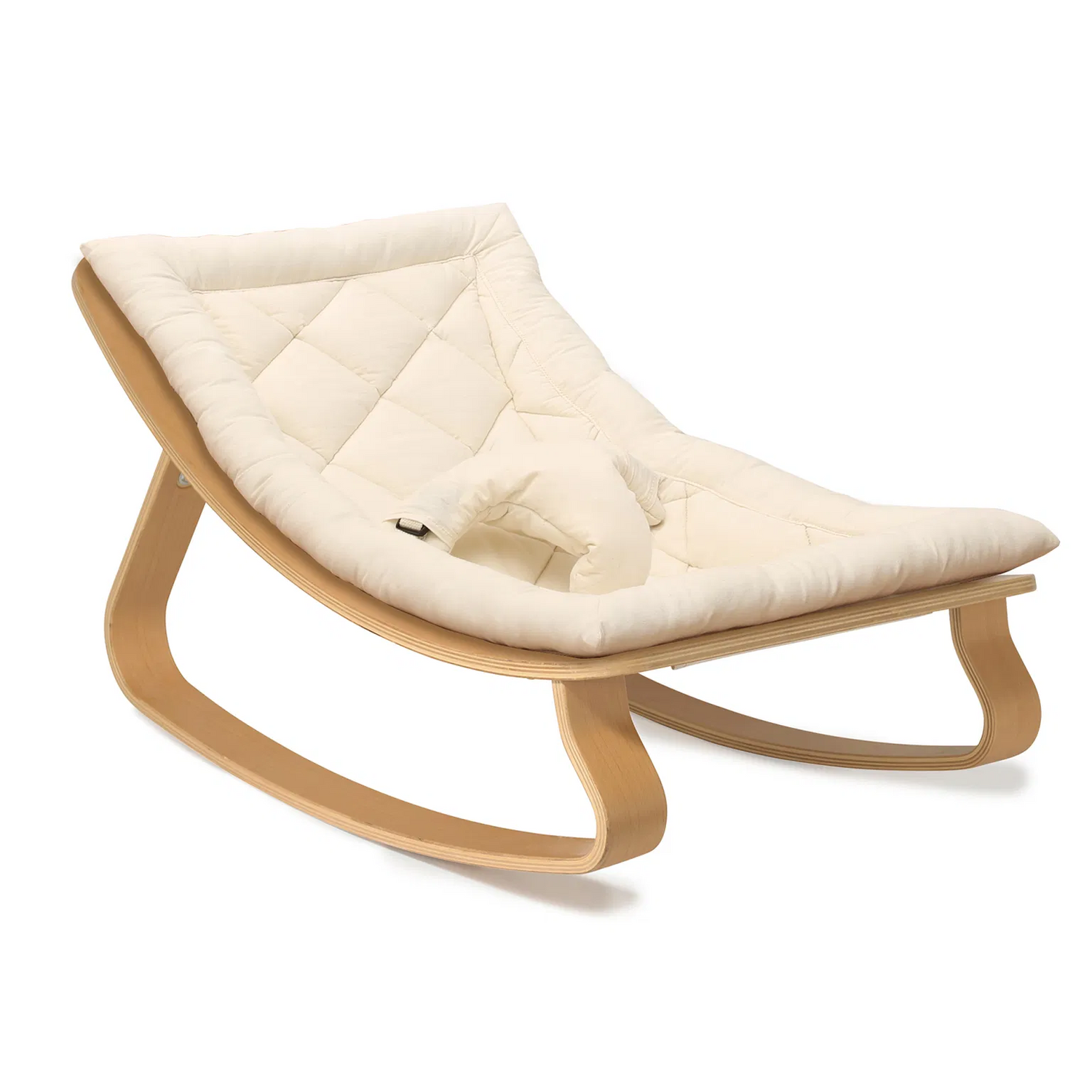
A baby rocker from the Charlie Crane collection is designed as a space for sensory discovery and relaxation during quiet moments of the day: storytime, a supervised rest, or quiet observation while parents go about their day nearby. The enveloping seat and its harness provide a reassuring cocoon for baby—a cocoon created for playtime and waking moments, not for overnight sleep or long naps.
The distinction is important: a baby rocker, however soft and comfortable, is not a cot. The semi-reclined position it offers is not the one recommended for sleep, which must always be on the back, on a firm surface, such as in a crib or a suitable cot. This is an essential distinction between a baby rocker and standard sleeping arrangements: the former is a space for play and active rest, while the latter is designed specifically for safe sleeping.
At Charlie Crane, the attention given to soft and breathable materials aims to soothe baby during their awake phases, making the transition between arms and the floor easier, without ever replacing a cot. Using the baby rocker for short sessions during the day, within an adult's field of vision, allows you to make the most of it while respecting baby's fundamental need: sleeping flat, safely, elsewhere than in this awake-time cocoon.

How to use a Charlie Crane baby rocker with complete peace of mind during the day?
During the day, a baby rocker is used for short sessions, never as a place for prolonged sleep. Here are a few guidelines for peaceful moments:
- Duration: favour short periods, around 20 to 30 minutes, without exceeding one hour at a time. Then alternate with a playmat, babywearing or simply arms; baby's body needs to move freely to develop their back and neck muscles.
- Supervision: even the best-designed baby rocker is no substitute for an attentive eye. It remains a space for rest or quiet play, to be used during a short task—preparing a meal, reading a story—never outside an adult's field of vision.
- Settings: make sure the harness is properly adjusted, and that the bouncer always rests on a stable surface on the floor — never on a sofa, a bed, or a table.
- Varying positions: regularly changing baby's posture and pressure points limits the risk of flat head syndrome and invites them to discover other points of support, essential for their early learning.
The attention given to materials and the minimalist design of Charlie Crane baby rockers accompanies these daytime moments with gentleness, without ever replacing real sleep time, which belongs elsewhere, in a cot or a flat-bottomed crib.
What should you do if baby falls asleep in the baby rocker during awake time?
A baby dozing off in their baby rocker during playtime happens in every family, and there is nothing worrying about it in itself. The right reflex is always the same: gently transfer the little one to their usual sleeping space, flat on their back, on a firm surface, in a suitable crib or cot. The semi-seated position of the baby rocker is only designed for supervised awake time, not for prolonged sleep.
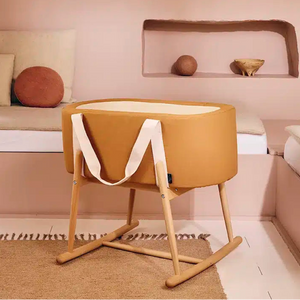
If these moments of dozing off become frequent, it is often a sign that baby is simply tired earlier than expected, soothed by the gentle rocking of the bouncer. Nothing unusual, but it is a good opportunity to shorten the awake windows slightly or bring the next nap forward, so that sleep happens in the right conditions from the start. And our iconic KUMI cradle also offers that same gentle rocking motion that soothes babies!
To limit these situations, a few simple guidelines: keep the baby rocker in sight, never place it on a raised surface, and regularly offer other postures—playmat, arms, babywearing—to prevent it from becoming the only place where baby falls asleep. At Charlie Crane, we design furniture crafted to accompany these awake moments with peace of mind, as a complement to, and never a replacement for, the true night-time cocoon that is the cot.
Frequently asked questions
Can you let baby sleep in their baby rocker for a short nap? No, even for a short nap, a baby rocker does not replace sleeping flat. Baby should be transferred to their cot or crib as soon as they fall asleep.
Why is the position of a baby rocker not suitable for sleep? Because it is semi-seated or semi-reclined: the head can tilt forward once muscle tone relaxes in sleep, which can obstruct breathing.
How long can baby stay awake in a baby rocker? It is recommended to favour short sessions, regularly alternating with a playmat, babywearing or arms, to encourage motor development.
What should you do if baby systematically falls asleep in the baby rocker? Gently transfer them to their cot and shorten awake windows so that the next naps take place directly in a suitable sleep space.


