

Everything you need to know about babywearing and baby carriers
Everything you need to know about babywearing and baby carriers with Sabrina from Nova Mum
Babywearing has been practiced since the dawn of time, across the world. Beyond the practical aspect, physiological babywearing meets the instinctive needs and development of newborns. It also helps create a precious bond between parents and their child. To learn a little more about babywearing and baby carriers, we met with Sabrina, a babywearing consultant and founder of Nova Mom. The mother of three children explains all the benefits of this practice and how to choose your baby carrier.
Charlie Crane: How can babywearing help parents and babies?
Sabrina: Babywearing meets the fundamental needs of the child: being reassured, being in contact with their parents. Truthfully, it brings benefits that intertwine between the baby and their parents. Babies are born without an instruction manual and parents have to learn to manage this new being, on top of daily life. In theory, when welcoming a newborn, you're supposed to do nothing for the first three months of the baby's life. That's unrealistic, because there are a billion things to do! Babywearing therefore allows you to have a calm baby in contact with their parent… who has their hands free. That's freedom! Carrying your baby should be a pleasure. In the end, when you meet babies' needs, you avoid situations where you feel helpless, especially for first-time children and first-time parents. You even feel more confident in yourself and in your parenting abilities.

Charlie Crane: We often hear about physiological babywearing — what is it?
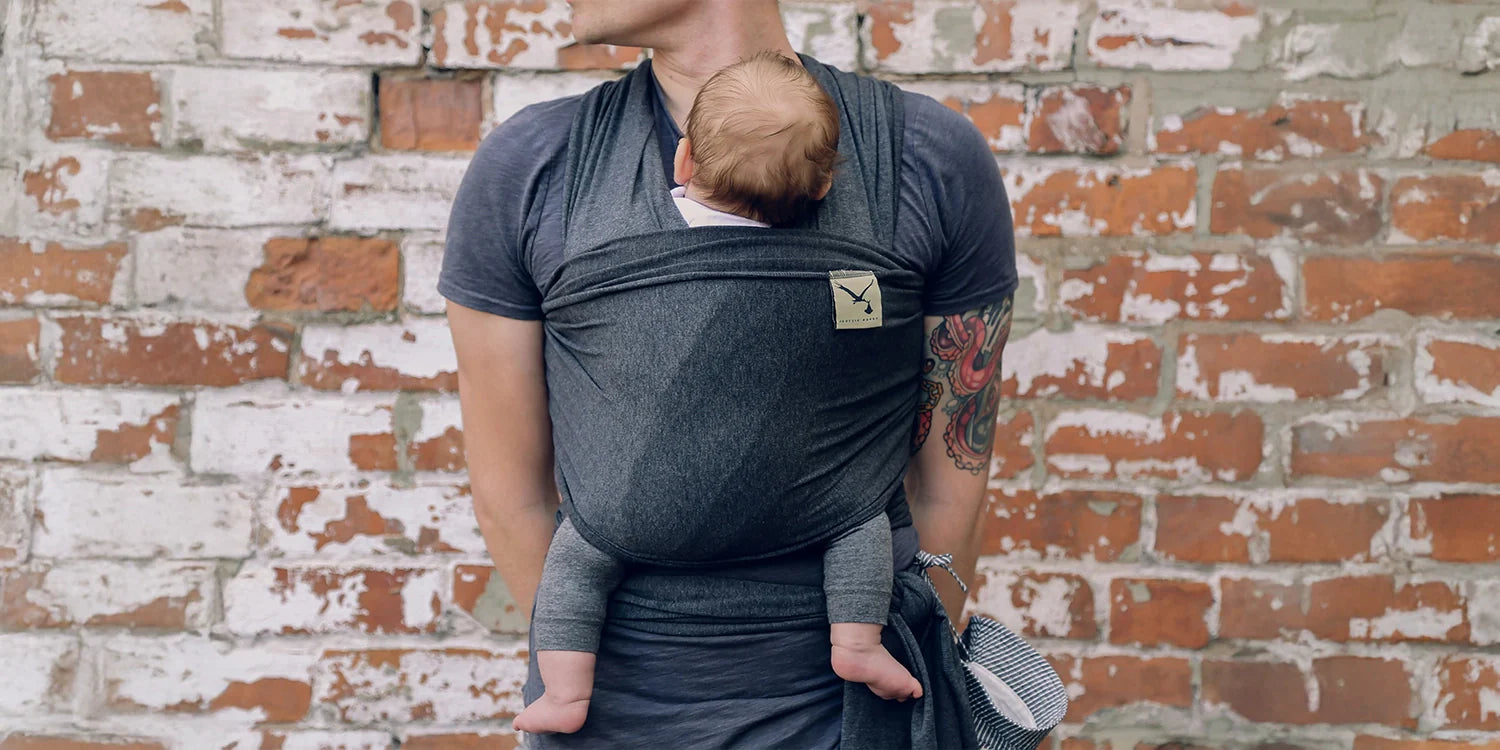
Sabrina: Physiological babywearing means respecting the motor development of the newborn. We position the baby in a way that respects their body and morphology, starting with their spine. In a wrap, the baby should have a rounded back, supported thighs, and knees higher than the hips. Carrying correctly gives the child a good grounding in their body in terms of their psychomotor development.
Charlie Crane: What is skin-to-skin?
Sabrina: Skin-to-skin is rediscovering pure sensations! You place your baby against your chest with no clothes or fabric between you. It's about pleasure, reassurance, cuddles, the endorphins that bring happiness, and bonding. The skin-to-skin technique is beneficial for getting breastfeeding started. This method is also recommended for premature babies.
Charlie Crane: Stretchy wrap, structured baby carrier, ring slings… there are many models — how do you choose your first baby carrier?
Sabrina: All these babywearing options form a toolbox that you shouldn't hesitate to fill. At birth, I recommend a sling or a stretchy wrap, which are the most physiological for respecting the baby's morphology. It's good to have two babywearing systems, in case of a problem — like a baby who has vomited on their sling and it can't be used before the next wash… Then, baby carriers are recommended from the moment the baby can sit up on their own, as they have the hip opening required to accommodate a baby carrier between their legs. They also have the muscle tone to support themselves. Ring slings are a great supplementary babywearing option. The parent can also simply use a ring sling and carry the child on their hip.
Charlie Crane: What to do if a baby doesn't like being carried?
Sabrina: If you're having difficulties, consult a babywearing consultant. Parents can miss something, particularly with a baby with GER who wants to stay upright because they're in pain! My third child had severe GER, and I had to feel my way forward to find the right way to carry them. Workshops allow for adjustments and… a chance to open up. You enjoy some time for yourself, whether during pregnancy or after. I recommend doing it with both parents.
Charlie Crane: What would you like to say to new parents?
Sabrina: Trust yourself and listen to your inner voice… Don't listen to grandma! If you feel like keeping your baby in your arms, do it — you are legitimate. During pregnancy, you can quickly feel patronized. After giving birth, you find yourself alone. When they say it takes a village to raise a child, it's true. Today, we build our own village with our loved ones, our friends… but they don't know everything. Let's open up about parenting difficulties so we feel less alone.
Thank you to Sabrina Carré for her time. Discover Nova Mom online.


