




The bedtime routine for peaceful sleep
Studies show that children with a bedtime routine fall asleep faster and wake up less often during the night. This reassuring framework reduces anxiety at the time of the nightly separation.

Sleep is crucial for both adults and children, supporting growth, mental health and cognitive abilities. Babies need an average of 16 to 17 hours of sleep per day for their development.
Bedtime is often one of the most sensitive moments in the lives of young parents. Between tiredness, crying, restlessness and difficulty falling asleep, establishing a bedtime routine can transform this moment into a gentle and reassuring ritual.
For it to be effective, it must be SIMPLE, REPETITIVE and CONSISTENT. It generally lasts 10 to 30 minutes, depending on age.
Why a bedtime routine?
Babies and young children need landmarks. The bedtime routine helps them:
-
understand that the day is coming to an end
-
feel safe and secure
-
fall asleep more peacefully
-
and to sleep better through the night
It is an anchor point that reassures the child… and the parents.
Studies show that children with a bedtime routine fall asleep more quickly and wake less often during the night. This reassuring framework reduces anxiety at the moment of nighttime separation.
 @kelly-sikkema
At what age should you start an evening routine?
Around 6 to 8 weeks, babies begin to differentiate between day and night. It is therefore possible to introduce the first gentle signals: dimming the lights, reducing stimulation, singing a lullaby, etc.
From 4 to 6 months, the routine really comes into its own and can be more structured.
The key steps of a bedtime routine
Here is what it can include:
Consistency is key.
Here is what it can include:
🛁 Bath time
It is not essential but it greatly helps with relaxation.
🧴 Nappy change + pyjamas
A quiet moment of care and attention.
🍼 The evening feed
Bottle, breastfeed or light dinner depending on age.
🤗 Gentle moments of affection
Massage, cuddles, rocking, slow breathing.
📖 The bedtime story
Perhaps children's favourite part. It nourishes the imagination and soothes the mind. You can also read them a lovely poem full of love and tenderness (ref. Poetry Collection for Newborns - Editions Charlie Crane).
🌟 Goodnight words
Always the same: a guaranteed sense of reassurance. "Goodnight, see you tomorrow", "I'm here, you're safe." These are powerful anchors.
______________________________________________________________________________________
After the routine, put the baby to bed while still awake so they can learn to fall asleep on their own.
______________________________________________________________________________________
The baby's bed
Whether baby sleeps in the parents' room or in their own room, there are certain rules to follow.
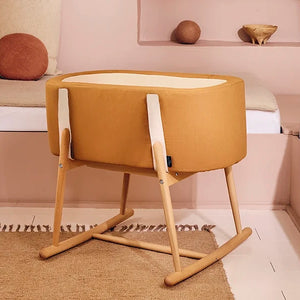
Your baby will feel reassured in a bed suited to their size, such as a KUMI cradle, or a KUKO Moses basket or a bed of a fairly small size. Babies like the sensation of touching the sides of the bed. You can also opt for a Kodo co-sleeper which reduces the stress of many parents and soothes babies.
Use a firm mattress well suited to the cot, with no pillow or duvet, and opt for a sleepsuit or sleeping bag, or even a swaddle blanket for the youngest babies (up to 3 months). Always lay your baby on their back.

Mistakes to avoid at bedtime
For an effective routine, there are certain pitfalls to avoid:
❌ Too much stimulation
❌ Varying the routine every evening
❌ Putting to bed too late or too early
❌ Screens before bedtime (disrupt melatonin)
❌ Systematically rocking to sleep in your arms if the goal is independence
When should you put your baby to bed?
Children's internal clocks develop gradually. A few guidelines:
🕖 Babies 0–3 months: irregular rhythm
🕣 4–12 months: bedtime between 6:30 pm and 8:30 pm
🕗 1–3 years: bedtime between 7:00 pm and 8:30 pm
🕘 3–6 years: bedtime between 7:30 pm and 9:00 pm
Watching for signs of tiredness (rubbing eyes, yawning, restlessness) is essential to avoid the "second wind".
A routine that evolves with age
As the child grows, the routine becomes more interactive and playful: longer stories, sharing about the day, breathing exercises, a night light, etc.
It remains a precious moment of emotional connection before the night.
Encouraging independent sleep
The goal is not for the child to fall asleep alone at all costs, but for them to gradually develop the ability to fall back asleep without significant help.
To do so:
✔ establish a consistent routine
✔ encourage falling asleep in their own bed
✔ support without over-stimulating
✔ use transitional objects (comfort blanket, sleeping bag, etc.)
 @minnie-zhou
🛋 The role of the environment
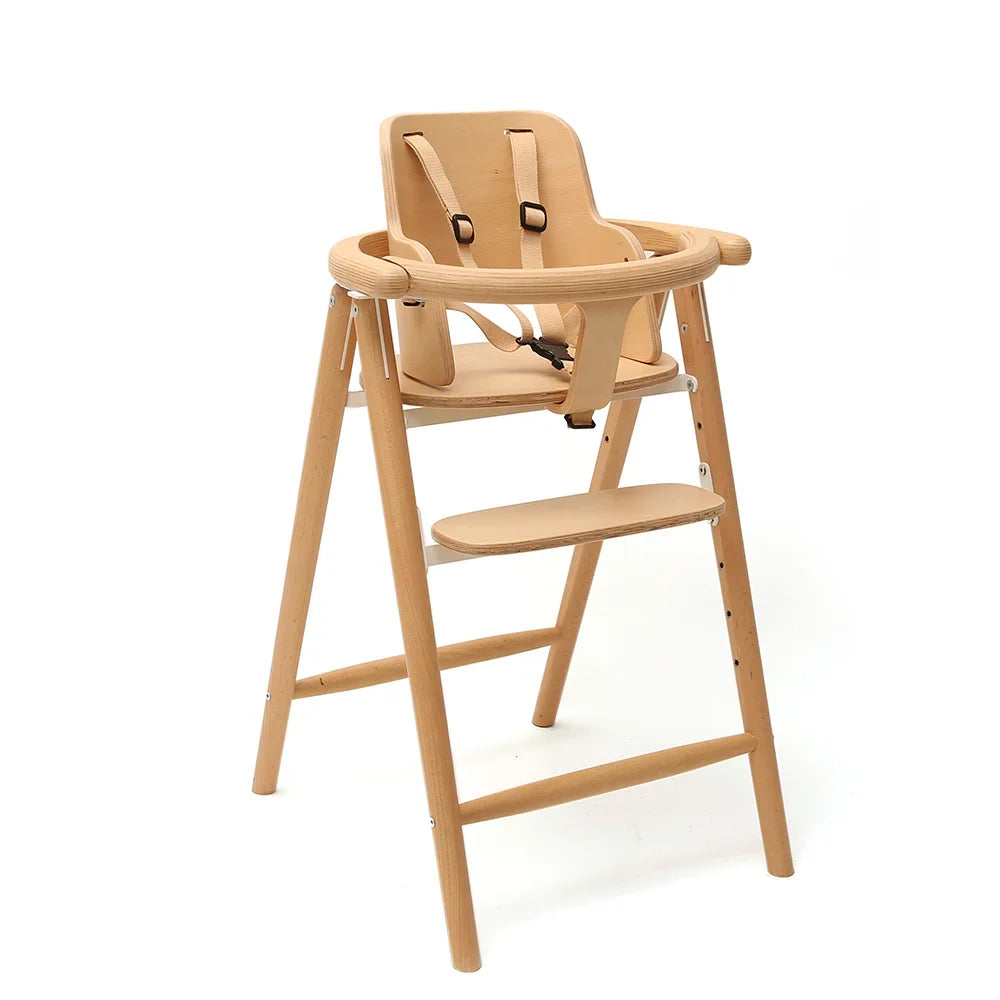
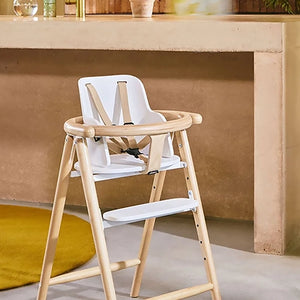
At Charlie Crane, we design furniture made for these moments:
cradles, bouncers, chairs, beds — that accompany children through their first routines, with beauty and gentleness.
A calm, harmonious and reassuring environment helps make bedtime a moment to look forward to… rather than dread.
Conclusion
The bedtime routine is not a constraint, but a simple and powerful tool for promoting peaceful sleep. Every child is unique: what matters is regularity, calm and gentleness.


