

Fostering your child's independence: our tips

Fostering your child's independence
"By myself". This sweet phrase, uttered several times a day by your child, has a knack for getting on your nerves. Welcome to a phase of independence, where your little one refuses your help. A little patience, as this step towards independence is important. Find all our tips to help your child sail towards independence and freedom.

What is independence in children?
Independence allows a young child to meet their own needs in order to feel fulfilled and confident in their own abilities. Independence also helps to develop self-esteem, a skill that is very useful at every stage of life. Some parents dread this phase, viewing it as a stage where their child no longer needs them. On the contrary, rest assured. Your child will always need you... even when they have acquired all the skills to make the right choices, now and in their future life.
At what age does a baby start developing independence?
At birth, your newborn is completely dependent on you for their survival. Then, little by little, they learn to express themselves, to grasp objects, to crawl, to walk on two legs... until they finally fly with their own wings. While you wait for that day, it is up to you, as parents, to show them the path towards independence.
In general, children ask to do things on their own from 18 months – obviously, this figure is a guideline, not a rule! From this age, some babies begin to show the desire to manage without their parents. In their daily life, they want to be able to "do it all by themselves".
Around 18 months, your baby asks for more independence: it is far from easy, as they are finding their feet. Their attempts are sometimes successes or… failures! From time to time, certain actions turn into little mischiefs that take time to sort out.
It is now your turn, parents, to have a good dose of patience to follow your little adventurer in their desires, as well as in the face of their famous "No, by myself!" moments. The well-known "terrible twos" is never far away when it comes to developing independence… The key will be to help them, without doing it for them.
Furthermore, having a degree of independence will help your child settle into school more easily when they turn 3. In another article, we share tips on how to help your children prepare for the new school year.
In any case, it is essential to encourage your child in their needs and to let them "do it"... even if they fail or are running late for nursery or school.

8 ideas for fostering your child's independence
So practically speaking, how can you support this journey towards independence? Follow our ideas:
1. Create an appropriate space
Set up a special corner in your home for your child. Create a nook in your living room, adapt their bedroom to their needs and size with various elements: provide an easy-access and safe children's bed, a small chair, their table and stool, where they can play, draw and explore in peace. Having a room at their height will make things easier for them.
2. Encourage free play
Let your child decide on their activity. It is fascinating to observe their little world and their environment during this process. What will they choose and how will they go about it? Free play stimulates creativity, decision-making and fosters independence. On your side, you learn to discover their preferences and observe their little gestures. FA-SCI-NA-TING, we tell you!
3. Be patient and let go
When your child is learning or wants to do something alone, offer them words of encouragement. When they knock over the pencil pot for the 8th time today and refuse your help to put everything back, breathe and let go. These steps are part of their learning process. Our tip for keeping calm? When little one wants to get dressed alone, or put on their shoes when you are in a hurry, give them one step to do, such as slipping in an arm or fastening a single velcro strap... then help them with the rest, explaining that they will be able to do more the next day.
4. Get them involved in daily tasks
Depending on their age, invite your child to take part in simple activities such as:
- Pouring ingredients into a mixing bowl,
- Cooking with you,
- Setting the table,
- Tidying away their toys,
- Wiping up or sweeping up spills,
- Gardening,
- Washing the windows,
- Doing a few household chores...
So, our little HIBO stool can be placed in your kitchen to help your child reach the right height. These moments strengthen the sense of belonging and importance. You give your child the feeling of being "capable".
5. Say yes and let yourself be surprised
As parents, we say "no" a lot. Sometimes it becomes a real reflex and we forget that our children grow up fast. In our busy lives, every minute counts. We are afraid of wasting time. Letting your child complete a whole task – who gets frustrated because they cannot manage – can become very difficult for adults. So, let go and press the pause button in these situations. Let yourself be surprised by your fast-growing child!
6. Respect their pace
Every child develops at their own pace. Give them time to explore and learn at their own tempo, while making mistakes. There is no need to compare, worry or rush them… The quest to acquire the basics is unique to each child! Your child needs to feel your support and attention.
7. Your role: lead by example
Show your child the way. You think they are too young? You never know — re-read our point 5. Your child observes you in everyday life and you are their role model. How to put on clothes, tidy up, hang up their coat, set the plates on the table, bring a dish, clear the table, clean up, wash, use their little chair and their stool... All these everyday gestures that seem ordinary to you are fascinating to a toddler. Children love to imitate adults and will follow your lead. Teach them how to do it first, and off you go!
8. Celebrate small steps and great achievements
When your child manages to do something on their own successfully, make it a joyful occasion. Clapping, cheers, encouragement… It is an opportunity to acknowledge their efforts. Be proud of your child and give them confidence. Sometimes little ones feel like giving up, and your cheers are a wonderful boost. Do not hesitate to talk to them and encourage them. They will learn gradually.

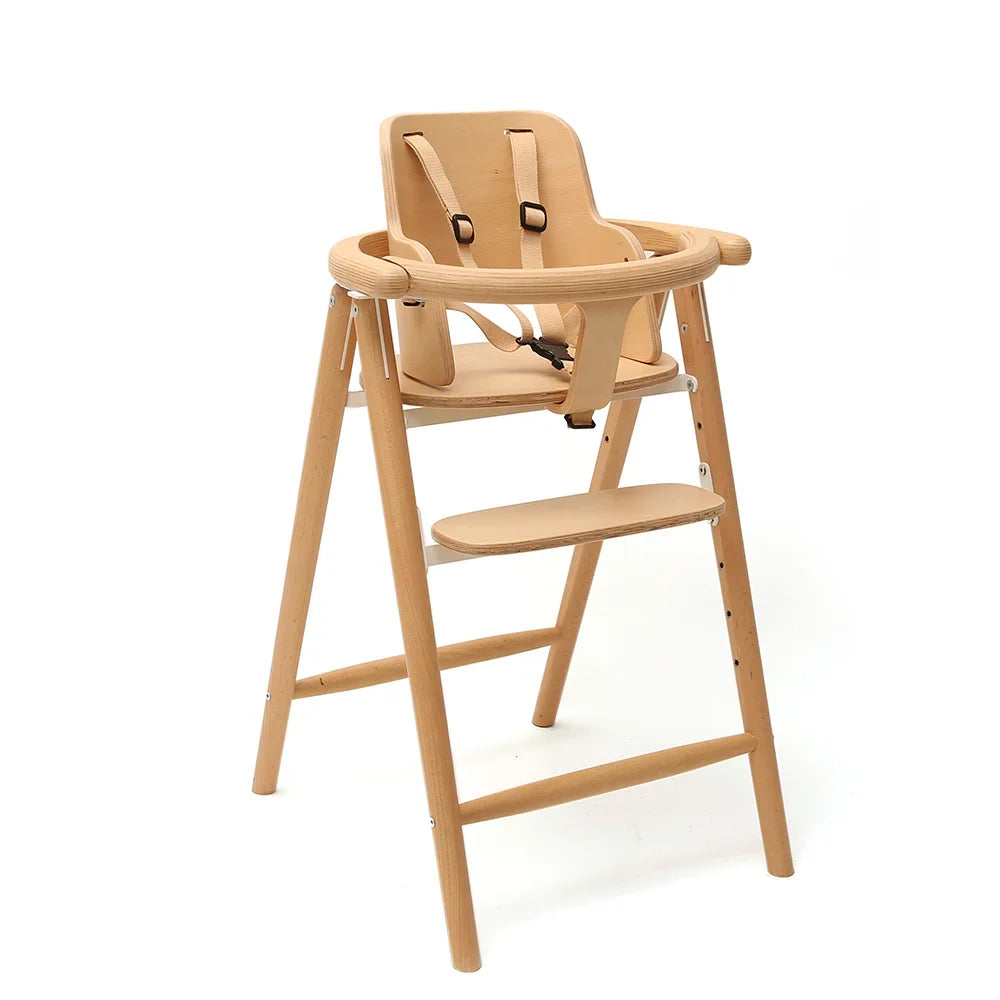
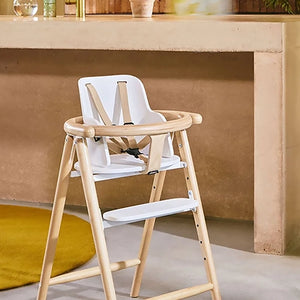
Our daily mission: to support your family life and guide your children towards independence. Our latest innovation, the little HIBO wooden chair and its stool, embodies our commitment to fostering the development and growth of your children… without forgetting the design of your home!
Our new HIBO chair and its stool are much more than children's furniture. They are designed with a deep vision: to encourage the learning of independence and to accompany you for as long as possible.
Their manufacture, using offcuts from our LEVO baby bouncer, also reflects our commitment to sustainable development.
They are designed for children from 18 months. Slip them into your living room, around your coffee table, in the kitchen to help the littlest ones reach the cupboards. The stool will also serve as a step-up in the bathroom to turn on the tap, wash their hands, brush their teeth… Let the learning and growing begin.
At Charlie Crane, we are determined to create unforgettable experiences for your family. With our little wooden chair and our stool, we hope to offer not only designer children's furniture, but also tools to nurture independence, confidence in your child, and memories for life.


