


Baby sleep: supporting and understanding it

The divine baby has arrived! After these nine months of waiting, your dream of holding them in your arms, seeing their sweet little face and smelling their tiny neck has come true. You have lovingly prepared their room and chosen the KUMI cradle for their first months. But here we are. Behind this new happiness lies the exhaustion of sleepless nights and a host of questions. Is my baby sleeping enough, when will they sleep through the night? These are legitimate concerns — every parent has them. Relax, Charlie Crane is here to answer them! Together with Audrey Ndjave, nurse and founder of the Perinatal Center, we explain everything about baby sleep.
Ideally, where should the baby sleep?
Audrey Ndjave: Ideally during the first few weeks, we share our bedroom with the baby. This helps prevent sudden infant death syndrome, as parents — especially the mother — are more alert and responsive. Sleeping with your baby strengthens parenting skills and shortens nighttime wake-ups by a few minutes. Moreover, the baby hears its parents nearby, which is reassuring for them.
Which bed to choose for the first few months?
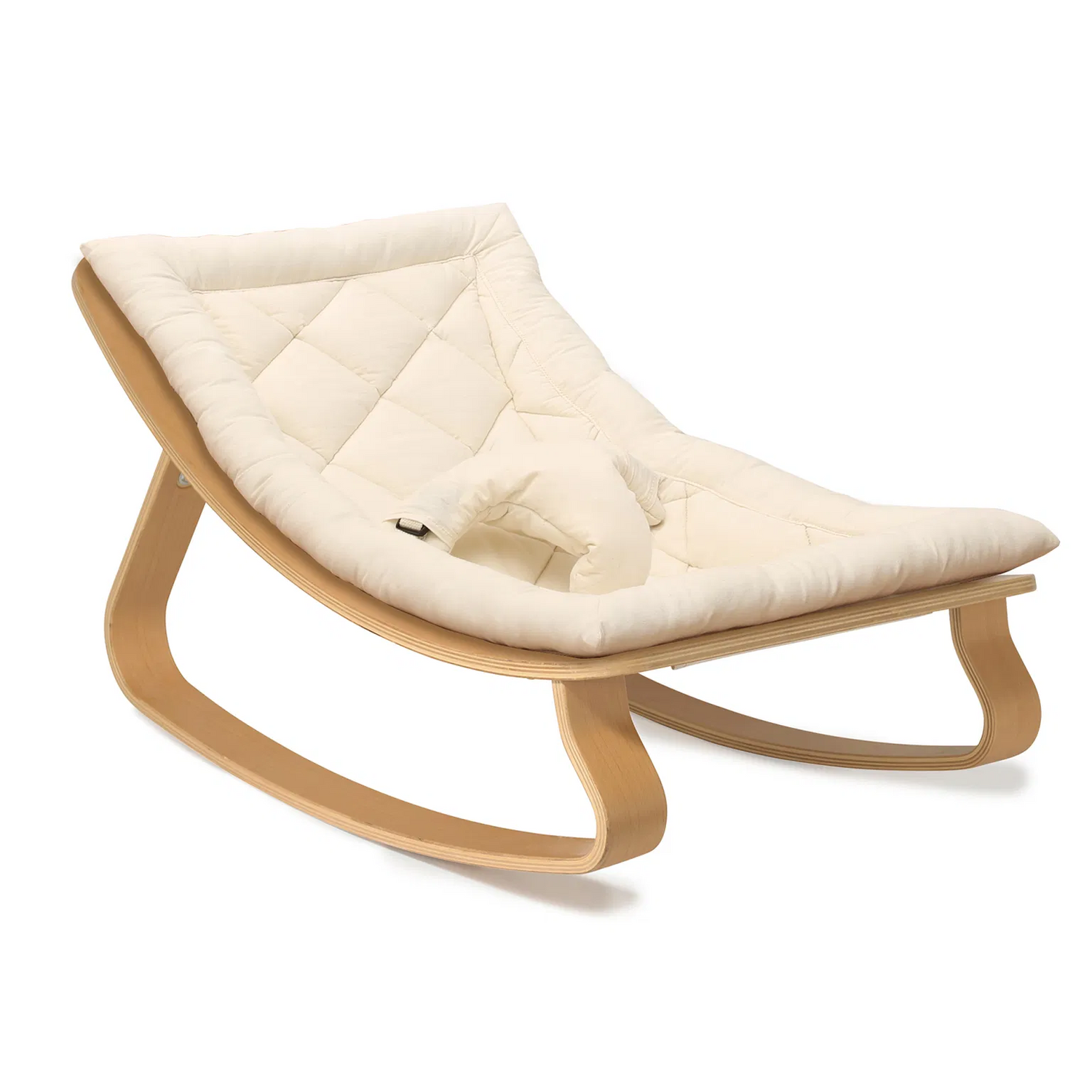
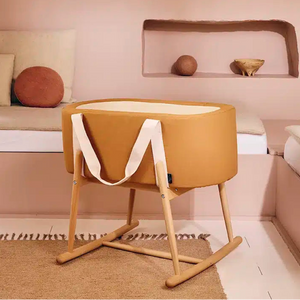
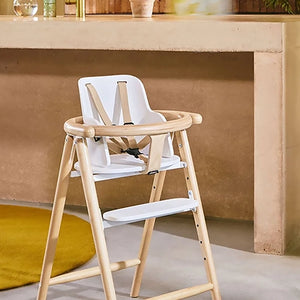
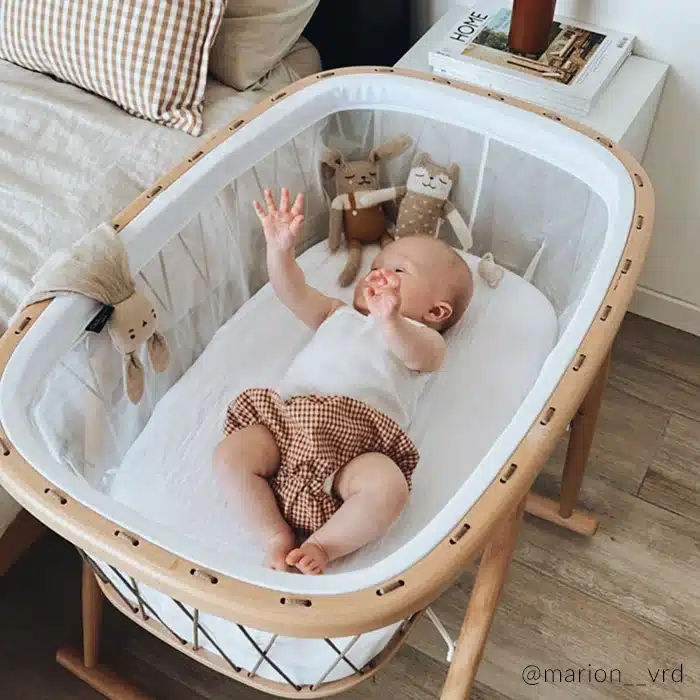
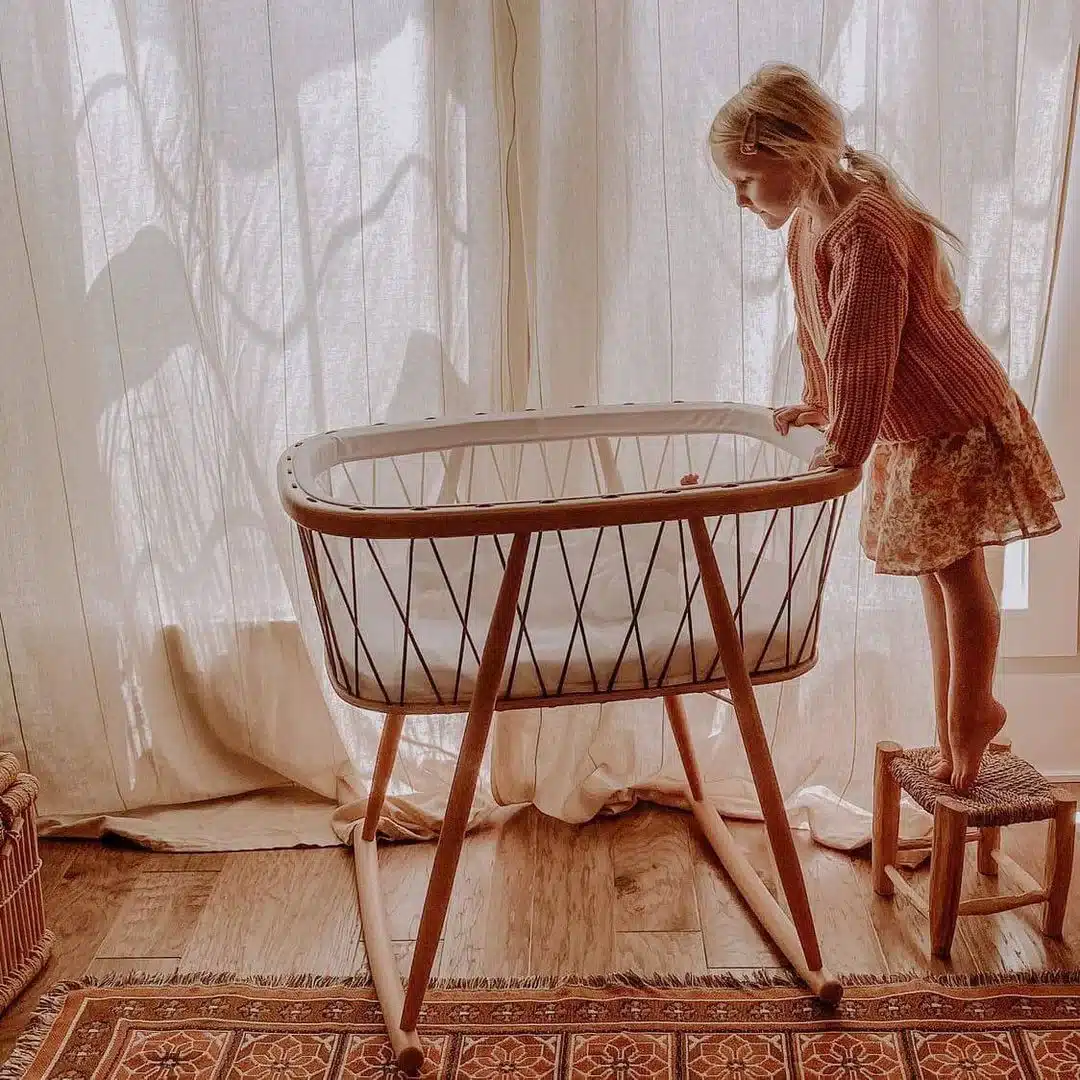
Charlie Crane: For the first months, it is recommended to have a cocoon bed. A compact format that will accompany you everywhere in your home, from your bedroom to the living room for naps. Cot beds with bars are not always recommended, particularly because children risk getting their legs or an arm caught. That is why we designed our KUMI cradle. This baby bed accompanies them during the first months of life. We designed it without bars but with a soft lace, covered with a beautiful voile for optimal safety and an openness to the outside world. For naps during the first months, the LEVO bouncer is perfect. And after 6 months, we move on to the convertible bed KIMI, which will accompany the child up to age 5. Here too, no bars — just a lace to personalize.
What is the average sleep pattern of a baby under 6 months?
Audrey Ndjave: The rhythm depends on each person's biological clock, but as a general rule a baby under 6 months can take 3 or 4 naps per day with a longer sleep period at night. To identify your baby's rhythm, keep a sleep journal and observe your baby's waking capacities. This is the first phase of the support program I created.
How to best support baby's sleep during the day and at night?
Audrey Ndjave: To best support your baby's sleep, it is important to know them well! It is also important to have realistic expectations based on your baby's age and what they are or are not capable of. Additionally, don't hesitate to call on professionals if you feel that something is hindering your baby's sleep.
Charlie Crane: Rocking is a trick as old as time. This movement reminds the baby of being in their mother's womb. The KUMI cradle has a gentle lateral rocker to recreate this comforting movement.
My baby doesn't nap or naps very briefly — what should I do?
Audrey Ndjave: The causes of short naps are multiple. It is possible that the baby is not in conditions favorable to sleep: cycle not respected, too much stimulation, discomfort, baby's rhythm not understood.
When will my baby sleep through the night?
Audrey Ndjave: Babies already sleep through the night, but with a different sleep structure. The human sleep cycle consists of alternating cycles of more or less deep wakefulness. Thus, there are at least 5 times during the night when we rise toward a state of wakefulness. In babies, coming out of this light wakefulness is explained by their emotional, neurological, and emotional immaturity…
What to do when you have a baby who sleeps very little and you are exhausted?
Audrey Ndjave: The first thing to do is to understand what is happening. How old is my baby, what stage is he going through? How long has the difficulty I'm experiencing been going on? Allied health professionals can help through a holistic approach.
How can parents catch up on their sleep?
Audrey Ndjave: It is very important not to neglect the sleep deprivation of parents and the mother! Lack of sleep is a factor in postpartum depression. It causes a dissociation from reality and accentuates the postpartum state, which is already a major upheaval. You need to find help around you, have your own circle of family caregivers, and call on a trained healthcare professional who can support the whole family. That is what we offer at our center!
Do we create bad habits for babies?
Audrey Ndjave: Sleep is a fundamental need. You cannot say that responding to a fundamental need is a bad habit! It is a virtuous circle around three elements: the signal, the ritual, and the reward. The repetition and regular sequence of gestures and actions leads to a reward: a state of well-being that ultimately enables the establishment of a habit in the baby. The signal is a behavior that the adult will interpret and therefore respond to with a ritual, which will in turn meet a need — that of sleeping, for example. What could be qualified as bad habits would be a ritual not suited to the baby's signal — for example, intentionally letting your baby cry is a bad habit!


KEY TAKEAWAYS:
- Ideally during the first few weeks, we sleep with the baby.
- Keeping a journal helps track the baby's sleep cycles and better support them.
- Actually… babies already sleep through the night, we just don't have the same rhythm.
- No, you will not create bad habits for your baby — you are simply responding to their needs.
- Ask your family and healthcare professionals for help.
- Don't forget about yourself!
- The KUMI is an ideal cradle for baby's first months, it keeps them safe, rocks them… and it's a beautiful object.
A big thank you to Audrey Ndjave for her answers — join us on Instagram to share your parenting experiences.


