

Bassinet, crib or convertible crib: how to choose your baby’s first bed?
Choosing a baby’s first bed depends above all on their age and mobility, far more than on aesthetic preference: a cradle or bassinet works for the very first months; a crib becomes necessary once your baby can roll over and pull themselves up; and a convertible crib is worthwhile only if you’ll actually use its different configurations. From sleep safety and available bedroom space to each child’s own pace, here’s how to choose between these three options with confidence.

Bassinet, crib, convertible crib: what does each option offer?
Three terms come up again and again when preparing a baby's nursery, and it's easy to confuse them, especially bedside sleepers and bassinets.
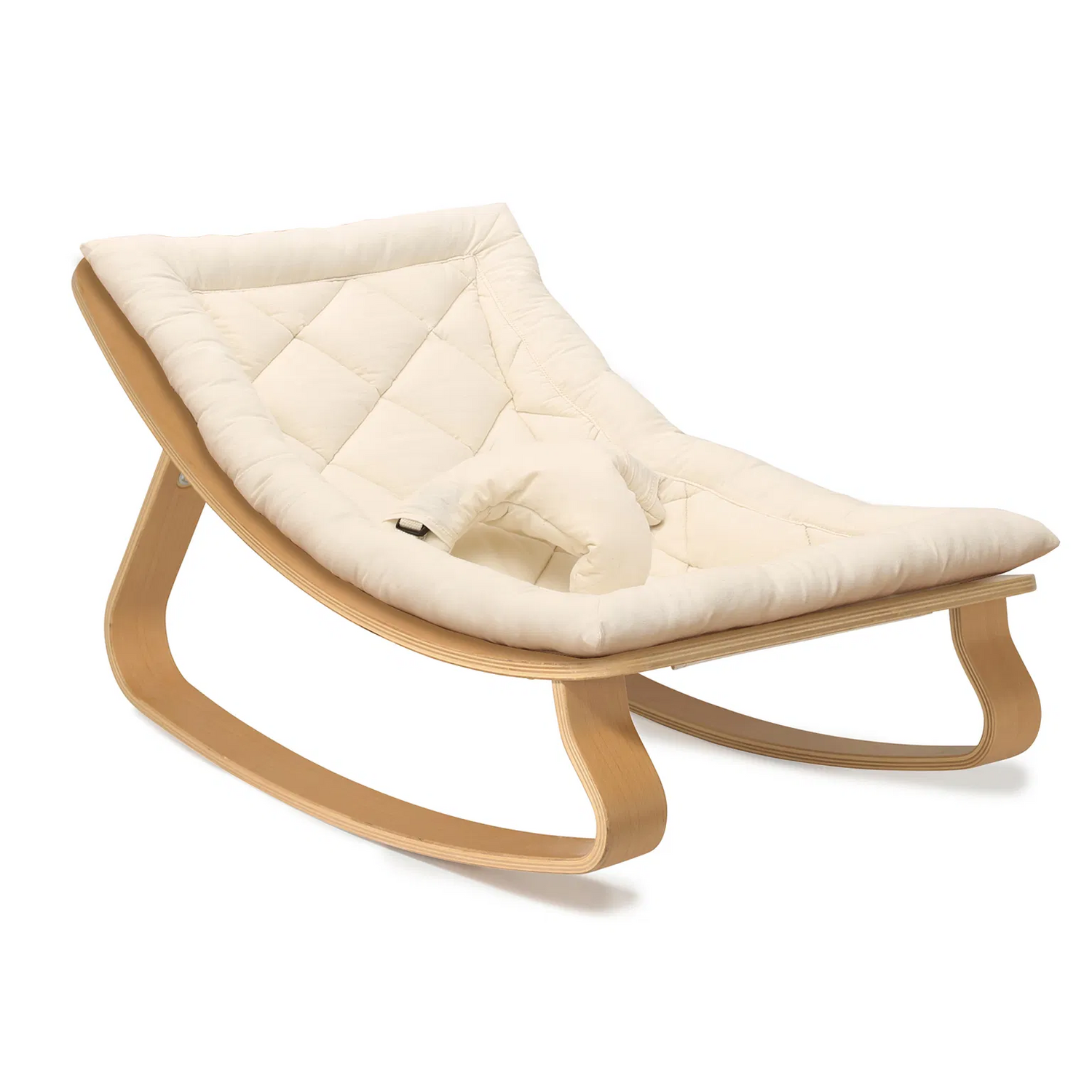
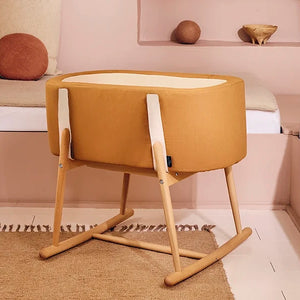
A cradle is a small, compact bed designed for the first months of life. Its smaller size creates a reassuring cocoon-like feel for a newborn and makes it easier to keep your baby close at night. A bassinet is a lightweight, portable bed that can be used from birth, but for an even shorter period. A bedside sleeper is neither an ordinary cradle nor a bassinet: it has a removable side and attaches to the parents' bed, keeping your baby close without sharing their mattress.
A crib is the next step, typically measuring 60 x 120 cm. Roomier, it serves your child for several years, from infancy until they first start getting out of bed on their own. A convertible crib, often 70 x 140 cm but sometimes starting at 70 x 90 cm, goes further: it transforms in stages, sometimes into a junior bed, to grow with your child without repeated furniture purchases. It shouldn’t be confused with a portable crib, which is designed only for occasional use while traveling.
Which bed should you choose for your baby’s age and stage?
It's better to watch what your baby can actually do than to go by a set age: every child develops at their own pace, and that should guide your choice of bed.
From birth to 4–6 months: cradle, bassinet, or bedside sleeper?
The cradle is for your baby’s very first months, generally from birth to around 4 to 6 months, depending on their size and motor development. Its compact size creates a reassuring, cocoon-like feeling after life in the womb and makes it easy to place in the parents’ bedroom, keeping your baby close through the night and during feedings. A bassinet or bedside sleeper meets the same need for closeness: the latter attaches to the parents’ bed with a removable side, leaving no gap between the two mattresses, so you can attend to nighttime wake-ups without sharing the parents’ sleep surface
But this stage of use is intentionally brief. As soon as your baby starts rolling over on their own, pushing up on their arms, or trying to pull themselves up, the cradle and the bedside sleeper reach their safety limits: the space becomes too small for their movements. Always check the manufacturer’s instructions, which specify the age or weight beyond which the sleep space should no longer be used.
After 6 months: why a crib becomes the go-to choice
Around 6 months, babies begin rolling over on their own, pushing up on their arms and sometimes pulling themselves upright. These motor milestones mark the natural limit for a bassinet or carrycot. The reason to change beds isn’t a trend; it’s safety. A compact sleep space that feels comfortable for a newborn can become cramped and potentially unsafe as a baby grows more mobile.
The crib then becomes the go-to choice, offering a sleep space designed for this new freedom of movement. Its adjustable mattress support lets you lower the mattress as your child grows: a higher position in the first few months and a lower one once they begin to stand. Standard sizes—60x120 cm for a classic crib and 70x140 cm for convertible versions—give your baby room to move, roll over and sit up without bumping into a frame that’s too small.
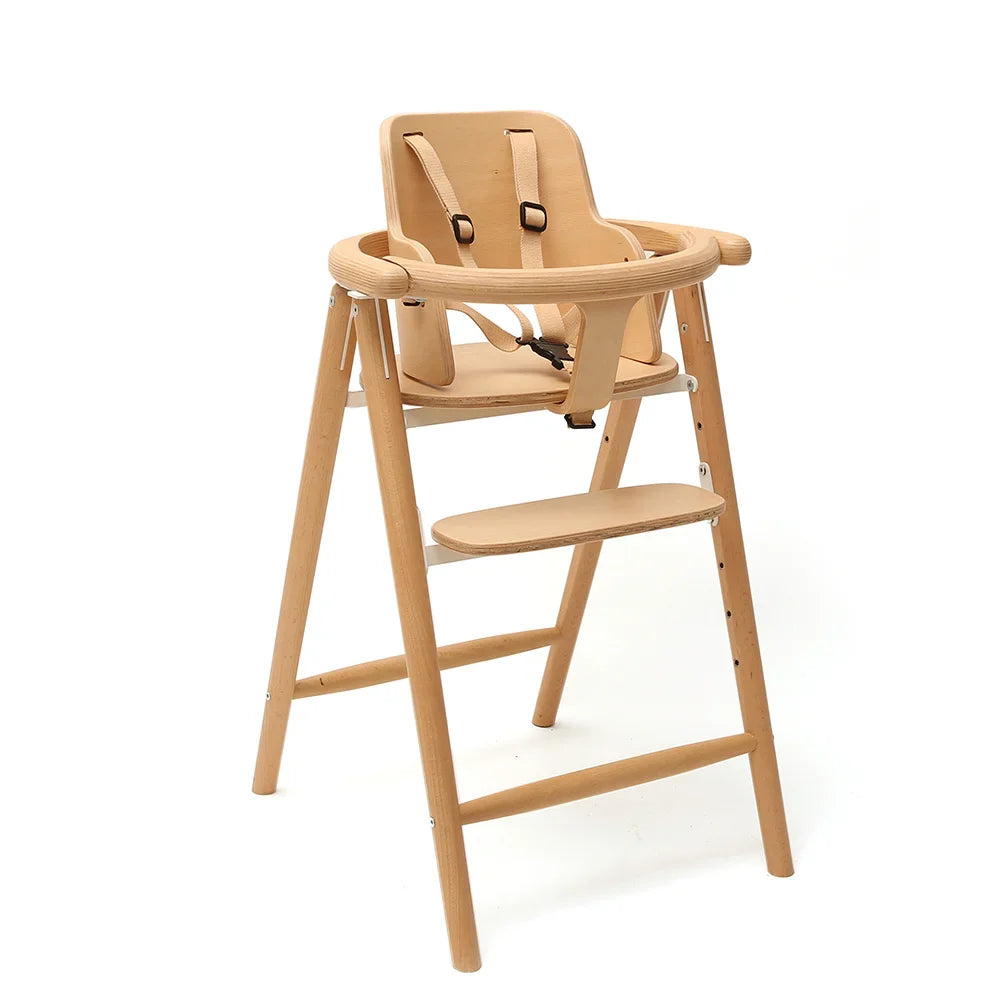
At Charlie Crane, we design furniture made to stand the test of time: a crib made from safe, durable European wood or a bed without rails can carry your child through this key stage with the same gentleness as in their first months, while meeting the safety needs of a more mobile child. Explore our baby bed collection to compare options suited to each stage.
Is a convertible crib a good choice as your baby’s first bed?
The term “convertible” can describe different features, so it’s worth checking what a bed actually does before buying rather than relying on the label. With a convertible crib, two features are most common:
- the height-adjustable mattress support, which lets you lower the mattress as soon as your baby starts pulling themselves upright or pushing up on their arms;
- the system of extensions or removable panels, which transforms a bed measuring 60x120 cm or 70x90 cm into a larger bed, sometimes even a junior bed.
In practice, this can spare you the purchase of an intermediate piece of furniture, but it won’t necessarily prevent additional expense: converting the bed often requires a mattress suited to each new size. Before choosing, check what’s actually included: whether the conversion kit is supplied or sold separately, whether the rails are removable, and whether the original mattress will fit the bed’s future lengths.
A convertible crib is worthwhile only if you actually use its different configurations; otherwise, it remains a standard crib. At Charlie Crane, we design furniture made to stand the test of time, with pieces that grow alongside your child without the need for repeated purchases—an approach that favors wood and safe, durable materials.
Which safety standards should you check before buying a baby bed?
Three things deserve particular attention before buying a baby bed, as they directly affect sleep safety:
- The spacing between slats: the NF EN 716 standard covers cribs for home use and requires spacing that prevents a baby’s head, legs or arms from becoming trapped, including around the slatted mattress support. Check that the manufacturer states compliance on the product page.
- The height of the adjustable mattress support: the higher position makes it easier to lift your baby in and out and is gentler on parents’ backs during the first few months. The lower position becomes essential once your baby starts pulling themselves upright, pushing up on their arms or trying to climb.
- Mattress firmness: the mattress should be firm, flat and fit the bed perfectly, with no gaps at the sides that your baby could slip into. An overly soft mattress, a mattress topper or an infant positioner not specified by the manufacturer has no place in a safe sleep space.
For a bassinet, check for compliance with the NF EN 1130 standard. In every case, favor safe, naturally sourced materials such as European solid wood for a nursery that feels fresh and calming.
What should you keep out of your baby’s bed for safe sleep?
Safe sleep for your baby starts with one simple principle: the bed should remain empty, whether you choose a bassinet, a crib, or a convertible crib. Some items commonly found in beautifully decorated nurseries should always be kept out of the sleep space:
- The crib bumper: however soft and attractive it may be, this fabric accessory has no place in your baby’s bed at any age.
- Cushions and soft objects: keep cushions, infant positioners not specified by the manufacturer, large stuffed animals and bulky comfort objects out of the bed during the first few months.
- Comforters and loose blankets: because these items don’t fit snugly around the mattress, they don’t provide the level of safety needed for your baby’s sleep. A sleep sack suited to the season is the preferred way to keep your baby covered safely.
- The pillow: unnecessary and not recommended, it offers no extra comfort at this age.
This list applies equally to a bassinet, a crib, or a convertible crib: the size and style of the bed do not change the rule. A simple sleep environment—baby on their back, a firm mattress, an empty bed, and an appropriate sleep sack—remains the best foundation for restful nights. Also keep the bed away from blind cords, curtains, and heat sources, and maintain a moderate room temperature for a cozy, safe space.
Frequently Asked Questions
How long can you use a bassinet or bedside sleeper? A bassinet or bedside sleeper is generally suitable for the first few months, until your baby becomes more mobile, pulls themselves upright or tries to sit up. Always check the manufacturer’s instructions for the stated age or weight limit.
Do you have to use a bassinet before moving to a crib? No. A crib can be used from birth if its mattress support can be set to a higher position. Some parents choose both: a bassinet for the first few months, followed by a crib.
Is a convertible crib always a better choice than a standard crib? Not necessarily. Its value depends on how many of its configurations you actually use and whether conversion kits and mattresses are available for each new size. If you don’t use those options, it’s much like a standard crib.
Which items should never be in your baby’s bed? Keep crib bumpers, cushions, comforters, loose blankets and pillows out of the bed. A sleep sack suited to the season remains the recommended way to keep your baby covered safely.
Which safety standard should you check for a crib? The NF EN 716 standard covers cribs for home use, including the spacing between slats and the slatted mattress support. For a bassinet, check the NF EN 1130 standard.


