

Bouncer, swing, or rocker: what are the differences?

Between the bouncer that moves with baby's kicks, the swing that rocks mechanically, and the rocker that sways ever so gently, it's easy to get confused. The main difference lies in the type of motion: natural and manual for the bouncer, motorized for the swing, and swaying and enveloping for the rocker—three ways to give baby a reassuring cocoon while parents catch their breath.
Baby bouncer, swing: what's the real difference?
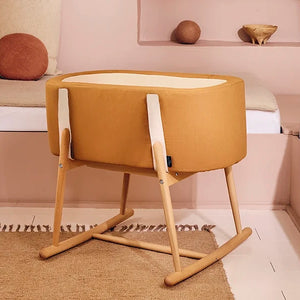
A bouncer is a stationary or naturally bouncing seat placed on the floor, in which baby rests or observes the world without any motorized assist: it is powered by their own leg movements or a gentle push from a parent. A swing adds an automated, often electric rocking mechanism that mimics the soothing back-and-forth motion of arms, featuring adjustable speeds and sometimes an integrated toy bar or lullabies. A rocker, a less common term in France, refers to a rocking seat with a smooth, enveloping motion designed for soothing rather than active play. This is a subtle distinction to keep in mind, even though in everyday French usage, these differences often blend into the two main categories of bouncer and swing.
Three different ways, then, to provide baby with a comfortable space while keeping parents' hands free:
- the baby bouncer wins you over with its lightness and understated design: quiet and portable, it moves effortlessly from one room to another;
- the swing focuses on prolonged comfort and sensory stimulation, sometimes offering multiple recline positions;
- the rocker remains primarily a passive relaxation space, designed for little ones who simply need gentle soothing.
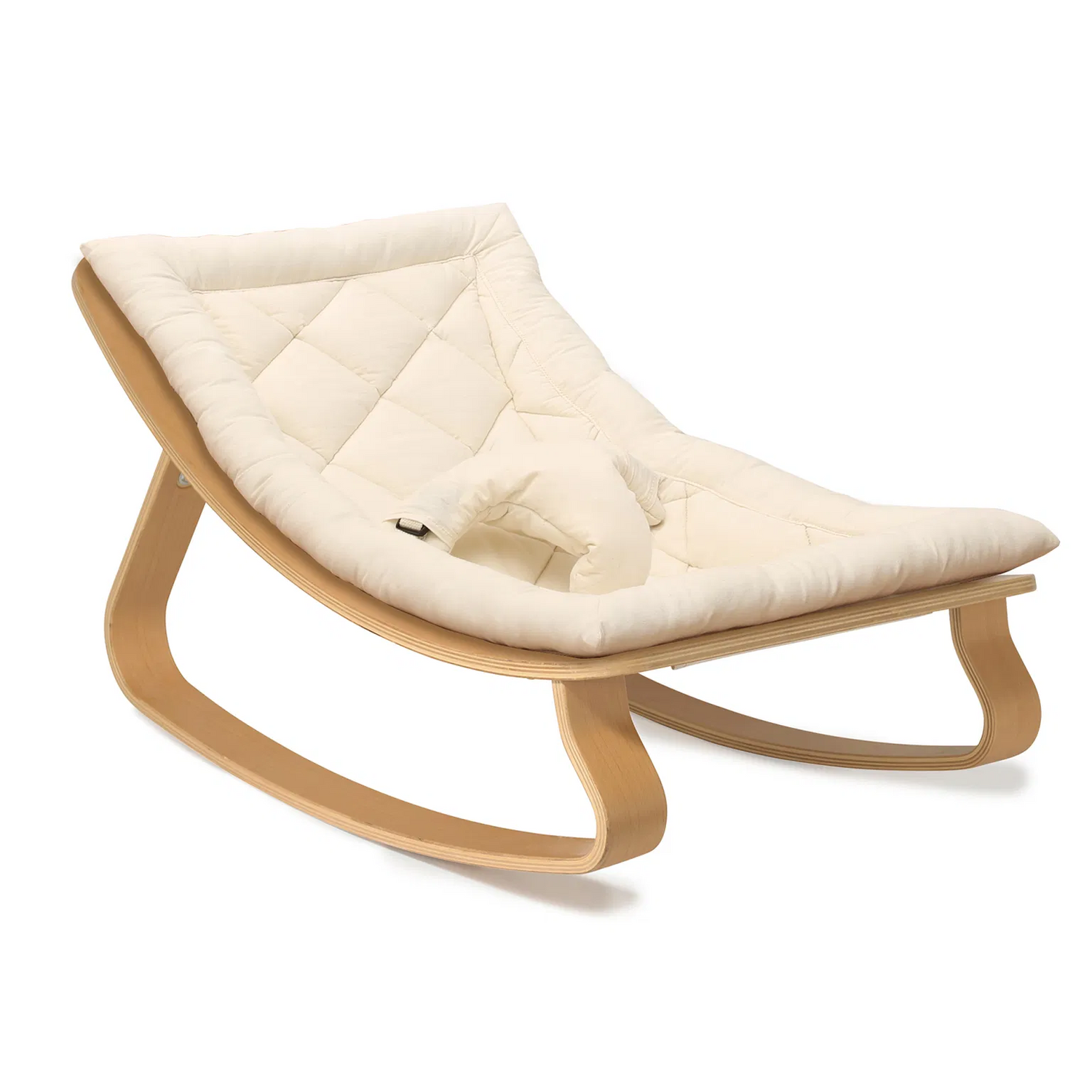
At Charlie Crane, this reassuring philosophy is embodied in a unique approach: designing the bouncer as a piece of furniture in its own right, aesthetic and durable, rather than mere functional gear. This is the subtlety of French design that shines internationally: when aesthetics meet functionality, the bouncer becomes a piece that belongs in the living room, not just in the nursery.
The baby bouncer: what is it actually used for?
A baby bouncer is a small reclining seat placed on the floor, designed to hold baby in a semi-reclined position from their very first weeks. Unlike a swing, it stays still or moves gently with the child's own motion: no motor, no settings, just a natural, gentle bounce. This simplicity makes it an everyday essential—lightweight and easy to move from room to room so baby stays close while you cook, work, or take a call.
At Charlie Crane, the range of baby bouncers perfectly illustrates this philosophy: where aesthetics meet functionality. The designs prioritize usability just as much as design, featuring a seat crafted as a cozy cocoon where baby can rest, observe their surroundings, or wait peacefully before meals. The subtlety of French design is reflected in the choice of materials: soft, breathable, easy-care fabrics that offer true comfort for a newborn's delicate skin, especially thanks to removable, machine-washable covers.
The baby bouncer naturally finds its place in a small urban apartment: compact, it stows away effortlessly. It accompanies those first few months until baby learns to sit up unassisted, before making way for other pieces of furniture. It's amazing how such a simple piece becomes the discreet companion of the first weeks of life, without ever replacing the attentive presence of an adult.

The baby swing: how it works and daily use
The concept relies on a back-and-forth motion that mimics the gentle rocking of a parent's arms: this is what fundamentally sets the swing apart from the bouncer, whose movement remains natural and driven by baby's own kicks. Two mechanisms exist depending on the model:
- the manual operation requires a gentle nudge from the parent—a hand on the seat, a foot lightly tapping the base—to start a soft, quiet sway without any electronics;
- the motorized operation takes over automatically: an electric mechanism maintains the swaying motion at adjustable speeds, freeing up the parent's hands and attention for a few precious minutes.
In practice, this makes a big difference in everyday life. An electric swing rocks baby while you prepare a meal or take a shower, offering several speeds to match their mood—faster to soothe fussiness, slower to encourage sleep. A manual swing requires a more continuous presence but remains just as soothing: the parent's repetitive motion provides its own comfort to the child.
At Charlie Crane, this thoughtful take on motion shapes the design of baby rockers and bouncers, created to gently support a newborn's waking and resting moments with an approach where comfort and simple elegance come before automated gadgets.
At what age and up to what weight should you use each piece of equipment?
Bouncers, swings, and rockers all cater to the same age window: the very first months. These products are designed to cradle baby from birth until they can sit up unassisted—a pivotal milestone that varies by child, marking the moment when a reclined seat is no longer suited to their developing mobility.
A few simple principles apply, whichever equipment you choose:
- always place the seat on the floor, never on a table or elevated furniture;
- always fasten the harness as soon as the child is placed in the seat;
- limit continuous use to preserve back and neck comfort;
- avoid letting baby sleep in it for long periods, choosing the flattest possible recline position for short naps.
As each frame has its own safety limits, it is always essential to check the manufacturer's specific guidelines rather than relying on a general average.

The Charlie Crane convertible baby rocker: a sustainable answer when choosing between a bouncer, swing, and rocker
Instead of accumulating gear over the months, Charlie Crane designs seating created to support baby over time, without sacrificing aesthetics. The baby bouncer collection available on charliecraneparis.com fulfills this quest for a piece that is both stylish and functional, naturally finding its place in an apartment living room or nursery, without the bulk often associated with the most cumbersome electric swings.
This approach resonates with young parents mindful of ecology and their child's well-being:
- a comfortable cocoon, designed to reassure without overstimulating;
- carefully selected materials that are soft and breathable;
- clean lines that blend effortlessly into refined interiors;
- a seat designed for back and neck support rather than an array of electronic features.
It is also this subtle French design that appeals far and wide: the right balance between reassuring function—soothing baby, offering a safe space for play or naps—and refined aesthetics. For parents hesitating between a bouncer, a swing, or a rocker, this option is worth considering as a sustainable alternative, designed to fit seamlessly into daily life rather than acting as mere transitional gear.
FAQ: Bouncer, swing, or rocker
What is the main difference between a bouncer and a swing? A bouncer stays still or moves naturally with baby's movements without a motor, whereas a swing offers automated, often electric rocking with adjustable speeds.
Is a rocker really different from a bouncer? Yes: a rocker sways back and forth, usually initiated by a parent or gravity, whereas a bouncer bounces gently in response to the child's own movements.
Can you let baby sleep in a bouncer or swing? A short nap is fine, but extended sleep in a semi-upright position is not recommended; a flat sleeping surface is best for longer rest.
Is a bouncer more practical than a swing for daily use? A bouncer is generally lighter and more compact, making it easier to move from room to room, whereas an electric swing tends to be bulkier.
How do you choose between a bouncer, a swing, and a rocker? The choice mostly depends on baby's temperament and the parents' lifestyle: active motion for a curious baby, or a gentle, enveloping sway for a newborn more sensitive to stimulation.


