





How to help baby sleep through the night?
At what age does a baby start sleeping through the night?
Here is the much-awaited question… Our main advice is to be realistic about your expectations. From 3–4 months, some little ones sleep 5 hours in a row. That's a very good average! Before 8 months, it's rare for a baby to sleep full 12-hour nights. We explain the different stages of children's sleep in more detail below.
Sleep phases in newborns
In your womb, your baby was warm and cozy. All their needs were met automatically. When they're born, your baby discovers a new world. They experience cold, hunger, pain, tiredness… As a result, they wake up several times a night, particularly to eat. Hunger is not the only reason for these nighttime wake-ups. Baby doesn't yet distinguish between day and night — this is known as the circadian rhythm.
Newborns need a lot of hours of sleep — between 16 and 20 hours per day. From 0 to 2 months, babies need 16 to 20 hours of sleep per 24-hour day, split between day and night. Their sleep cycle lasts 50 minutes to one hour, with a longer active phase and a shorter quiet phase. During the active sleep phases, it may seem like baby has finished sleeping. They stir, grunt, move around… but they're still asleep. A quick tip: don't rush to your child if you think they've woken up. First, check whether they're still drowsy. In short, avoid waking a sleeping baby (even if you miss them too much).
Some babies move smoothly from one cycle to the next, while others have more difficulty. The same goes for falling asleep. Your baby asks for your arms or your presence… and that's perfectly normal. Ideally, alternate between falling asleep in your arms (if they need it) during naps and sleeping in their crib in a suitable environment. This approach is particularly beneficial for learning the difference between day and night.
Still unsure? The good news is that when a baby is very little, you can't create bad habits. As Maëlys Le Levreur would say, you're responding to their needs. From 4–6 months, it's advisable to let your child learn to fall back asleep on their own (easier said than done, we know!).
Now let's get to the tips — and if you're experiencing real difficulties, consider consulting a sleep specialist.
Baby's sleep from 3 months onward
Generally, it's from around 3–4 months that your child begins their so-called full nights relative to their baby schedule. That's 5 to 6 hours of sleep in a row. A note for parents who worry when comparing with other children: this figure is an average, not a standard.
Signs to watch for when putting baby to bed
To help babies sleep well, observe your baby. Learn to spot these telltale signs of tiredness:
- Baby yawns,
- They rub their eyes,
- Their gaze is distant or blank,
- Baby is sucking their thumb or fingers, touching their face,
- Baby is crying, very calm, or on the contrary fussy…
As soon as you notice one of these signs, offer your child sleep within 15 minutes. Don't wait until they're already asleep to place them in their crib.
The importance of the evening routine for babies
In the evening, establish a routine that will be nearly always the same. There's no need to try different techniques every night — babies generally need consistency… This little sequence will be the signal that it's time to wind down. This reassuring routine should be put in place from 6 to 8 weeks. Your baby will gradually learn to recognize nighttime cues thanks to the environment you create.
When it's almost time to drift off to dreamland:
- Put your child to bed always at the same time, between 6:30 and 8:00 PM.
- Put your child to bed in the same place — their room or the one you share.
- Reduce noise in the house.
- Dim the lights in their room: draw the curtains or shutters if it's still light out to set the mood for baby.
- Turn on a nightlight.
- Put baby in their sleep sack.
- Sing them a lullaby or read them a short story.
- After a cuddle, place your baby in their baby bed.
- Back away gradually, without making the floorboards creak…
- Gently close the door… and pray to the sleep gods!
More tips for a good night's sleep
Nighttime sleep is also prepared during the day with naps:
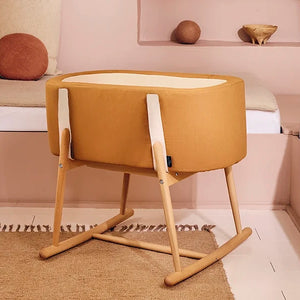
- Respect their daytime nap needs. Ideally, your baby will sleep during the day at least once in their bassinet or their Moses basket.
- Don't skip naps or push back the evening bedtime. Baby won't shift their schedule just because you put them down later. They risk being even more fussy… and so will you!


We wish you all the best on your journey toward full, restful nights!
The Charlie Crane team


