






4 benefits of co-sleeping for babies: what sleep, breastfeeding, and bonding reveal
The benefits of room-sharing are numerous: it can help babies fall asleep, support physiological regulation, make nighttime breastfeeding easier, and strengthen the parent-child bond. Depending on how it’s practiced and the child’s age, these benefits take different forms, but they all rest on the same principle: keeping parents and infants close at night.

The benefits of co-sleeping extend to falling asleep, physiological regulation, nighttime breastfeeding, parental attentiveness, and bonding. These benefits vary with the arrangement you choose and your child’s age, but they all rest on the same principle: parents and baby being close at night.
Co-sleeping: sharing sleep space with measurable effects on baby
Room-sharing means having the baby sleep close to their parents in a separate sleep space in the same room. For many parents, this closeness is more than a practical arrangement: a baby who sleeps near their parents regulates their heart rate and temperature better, falls asleep more easily, and gets back to sleep more quickly after waking. It also makes breastfeeding or bottle-feeding in the middle of the night easier, reduces the infant’s stress through the reassuring presence of a parent, and helps build a bond from the first weeks.
1. Falling asleep more easily with a parent nearby
From the very first nights, closeness between a baby and their parents helps soothe them to sleep. Just inches from their mother or father, the infant senses the adult’s breathing, warmth, and heartbeat—familiar cues that recall life in the womb and help them regulate their emotions. This closeness creates a comforting sensory cocoon for the baby.
A child who senses their parents nearby often falls asleep more easily and settles back to sleep sooner after waking. Sharing a room also lets parents respond to their signals almost immediately, helping to limit rising stress.
This benefit, however, is documented primarily for room-sharing, which is recommended during the first months because it combines closeness with a safer sleep setup. To make the most of it:
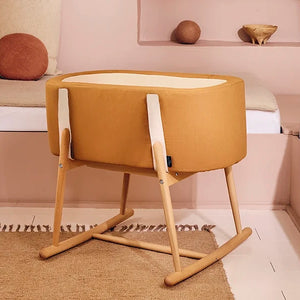
- choose a suitable bedside crib or bassinet with a firm mattress, and never share the parents’ bed directly;
- keep baby’s sleep surface level with your own, with no gap between the two structures.
At Charlie Crane, we design furniture to gently support families through these first months, using natural materials such as European wood that are mindful of your child’s sleep and your peace of mind as a parent.

2. Better temperature regulation and physiological stability for baby
Physical closeness plays a tangible role in a baby’s physiological balance: temperature, heart rate, and breathing gradually synchronize with those of their nearby parents. This synchronization recalls conditions before birth and can have a calming effect.
A baby who senses a parent’s warmth and breathing can more easily regulate physiological cycles that are still developing. This closeness also helps parents notice discomfort sooner—whether baby is too warmly dressed, breathing irregularly, or needs comfort—without ever replacing the essential safety rules for co-sleeping.
To maintain this reassuring cocoon while meeting an infant’s temperature needs, the choice of materials matters:
- a breathable organic cotton sleep sack that feels soft against the skin helps keep baby at a comfortable temperature without blankets or comforters, which should not be used in their sleep space;
- a co-sleeping crib or bassinet made of European wood, positioned at the right height beside the parents’ bed, combines natural comfort with attention to safe sleep practices;
- The room, kept between 18 and 20 degrees, completes this setting designed for this stage of physiological regulation.
3. Practical support for nighttime breastfeeding
For breastfeeding mothers, room-sharing changes the nighttime routine. With baby sleeping nearby in their own sleep space beside the parents’ bed, there’s no need to cross the home for a feeding: you can simply reach over or pull the bassinet closer without leaving the room.
This closeness limits major disruptions to sleep: you can remain partly asleep while feeding baby, making it easier for both of you to fall back asleep afterward. Feedings happen calmly, without turning on lights or making long trips that wake everyone up.
This arrangement benefits your baby, too: sensing a parent nearby helps them fall back asleep quickly after a feeding, without prolonged crying. An appropriate separate sleep space makes all the difference: a crib or a bassinet or cradle for your baby with a European wood frame, paired with organic cotton bedding, creates a breathable, cozy space for nights together while giving everyone room of their own.
4. Greater parental awareness of baby’s cues
Sleeping close to your baby lets you notice the slightest signal much sooner: crying, breathing difficulties, or discomfort caused by temperature or position. Just inches away, parents instinctively pick up on subtle cues before they turn into full-fledged cries. This attentiveness leads to small nighttime checks: adjusting a sleep sack or placing a hand on your baby to make sure everything is okay. For families who breastfeed at night, this closeness also makes it easier to spot signs of hunger quickly.
This constant attentiveness does not replace basic safety rules: a firm sleep surface, baby on their back, and no pillows or bulky comforters. At Charlie Crane, we design furniture made to last, using natural materials such as European wood and organic cotton to help create a reassuring cocoon for baby and for parents seeking peace of mind during these first months.
Beyond these four effects on sleep and physiology, co-sleeping is also thought to play a role in developing a child’s bond with their parents and their sense of trust. It is important to distinguish observed mechanisms—synchronized rhythms and parental responsiveness—from families’ own perceptions: a shared sense of security and a closeness built night after night. Sleeping in separate rooms within a safe, reassuring environment does not prevent that same bond from developing in other ways.
These benefits also depend on your baby's age. The first few months offer the greatest benefits of closeness and nighttime breastfeeding, and are when room-sharing is most recommended. After a few months, the risk decreases, and each family can adjust sleeping arrangements to suit everyone's sleep needs.

FAQ
Is co-sleeping suitable for babies of all ages? Room-sharing is especially recommended during the first months of life, when having parents close by and checking on baby at night are most useful. After that stage, each family can adapt the arrangement to the sleep needs of both child and parents.
What’s the difference between room-sharing and bed-sharing? With room-sharing, baby sleeps in their own sleep space in the parents’ room. Bed-sharing means baby sleeps directly in the parents’ bed, a practice that requires additional safety precautions.
Which materials should you choose for a co-sleeping setup? A crib or bassinet made of European wood, paired with organic cotton bedding and a breathable sleep sack, offers a natural, comfortable environment for baby’s nights.
Is co-sleeping essential for bonding? No. Being close at night can help, but a child who sleeps in their own room in a safe, reassuring environment can develop just as strong a bond with their parents.


