

Pregnant at Christmas: what can I eat and drink?
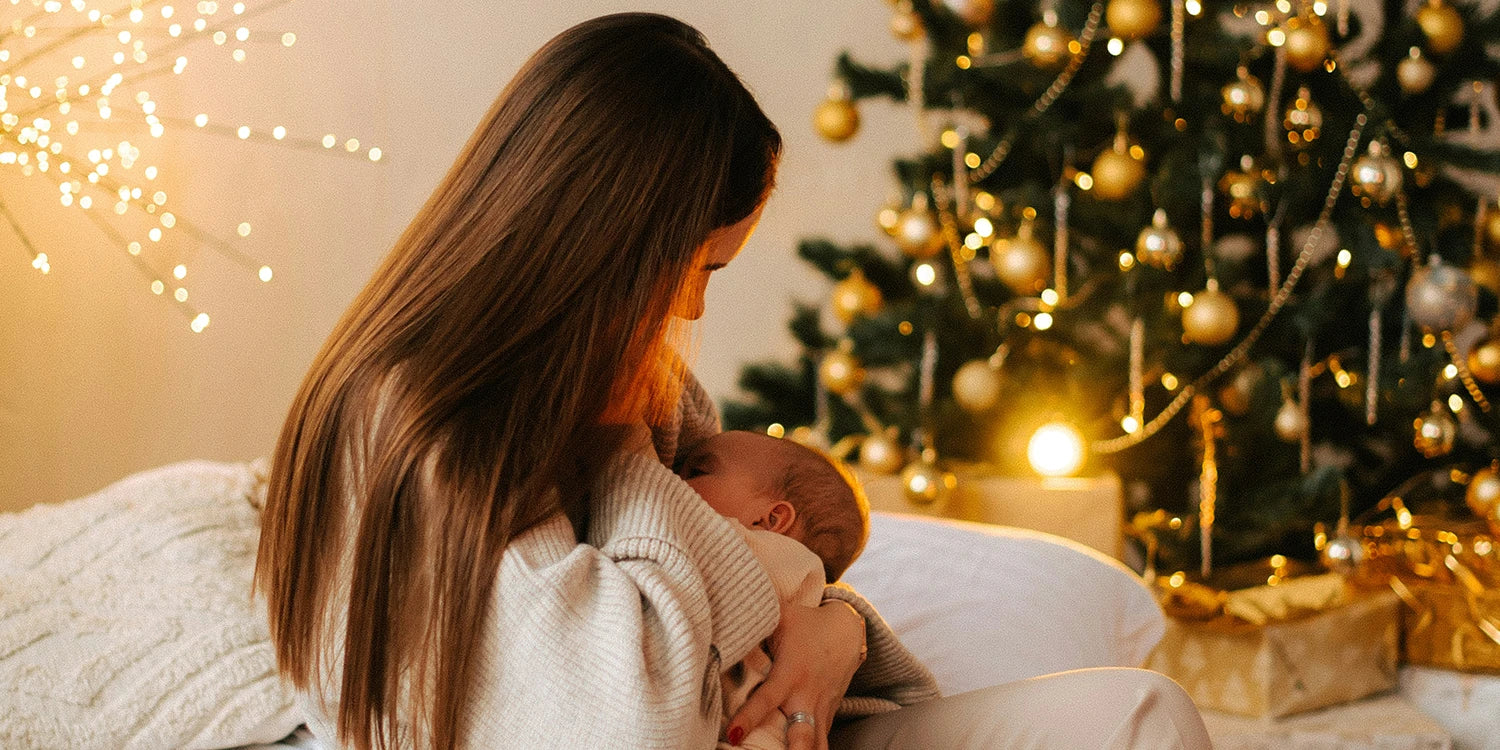
Marie: Let's talk about eating during the holiday season. Now there's a topic that generates a lot of discussion! During pregnancy, what can you eat at Christmas?
Léa, midwife and head of medical content at May: During pregnancy, there are many dietary restrictions. These precautions aim to guard against toxoplasmosis and listeriosis. At the first medical consultation, a serology test is carried out to find out whether you are immune to toxoplasmosis. However, listeriosis concerns all pregnant women. It is a rare disease affecting 300–400 people per year across all of France.

Here is a summary of the advice:
- Oysters, shellfish, and raw seafood should be avoided. Indeed, Listeria, which may be present in these raw foods, is a bacterium killed by heat. As soon as you eat a cooked food, the risk of listeriosis is eliminated. However, oysters, which are often eaten raw, do present a risk. Cooked shrimp are fine.
- Uncooked smoked salmon should be avoided. If it has been baked in the oven or cooked in a quiche, for example, then it's fine.
- For foie gras lovers: say no to artisanal, raw, or semi-cooked foie gras. Say yes to pan-fried foie gras and to foie gras in pasteurized, industrial jars.
- Cheese: generally speaking, pasteurized cheeses are allowed, but not others. Raclette during pregnancy is also allowed since the cheese is cooked! The Listeria bacterium is killed when cheese is thoroughly cooked, so it doesn't matter if you eat unpasteurized cheese… as long as it is well heated and cooked.
- For catered dishes, it is recommended to reheat them before eating in order to avoid any bacterial contamination.
- Deli counter items need to be recooked.
- Frozen dishes such as raw salmon or sushi carry a risk of listeriosis. This bacterium is resistant to cold. It is not recommended to eat frozen sushi when pregnant. It is toxoplasmosis that is destroyed by cold.
- If you eat frozen vegetables, the risk of toxoplasmosis is avoided thanks to the freezing process.
- Desserts such as pastry cream or a Yule log that are uncooked and made with raw eggs should be avoided. In industrial preparations, cooks often use pasteurized raw eggs, so those are fine. Always check the ingredient list carefully.
- Be wary of homemade mayonnaises made with fresh eggs. Industrial mayonnaises are often made with pasteurized raw eggs, and those are fine.
- Fish, capons, turkeys, and other meats are allowed provided they are well cooked.
Marie: Now let's talk about alcohol and pregnancy. Can you have a small glass of champagne during the holiday season when you're pregnant?
Léa: Throughout pregnancy, it's zero tolerance for alcohol, even at 8 and a half months! There can be repercussions from the beginning to the end of pregnancy due to any spirit (wine, champagne…). The risks are malformative and/or cerebral. They can affect the child with attention disorders, learning delays, and much worse. Take zero risks by banning wine and other alcoholic drinks from start to finish of pregnancy. The celebration can be just as lively with alternatives such as JNPR.
Marie: For breastfeeding mothers, what can they eat at the Christmas Eve dinner?
Léa: During breastfeeding, there are no particular dietary contraindications. It's great to eat a bit of everything as part of a balanced diet. Unless you follow a specific elimination diet when a particular allergy is suspected in the child.
Marie: Are breastfeeding women allowed to drink alcohol?
Léa: It is always recommended not to drink while breastfeeding. Alcohol takes three hours to be eliminated from breast milk. If you can organize things safely and without risk to the baby, then why not have a small glass. The risk is higher with a very young baby and on-demand breastfeeding. Potentially, the baby may quickly ask to feed and the three hours may not have passed yet… That's a lot of calculations to get it right! Some mothers use a breast pump to replace the next feed with milk expressed beforehand. Each mother does as she wishes.
Marie: Non-alcoholic beers sometimes contain a small percentage of alcohol—is that a risk?
Léa: You need to read labels carefully. The less you consume, the better. Dishes cooked with wine are also a tricky question. In theory, when alcohol is heated, it evaporates. But how long was the dish heated, and so on. And also… alcohol never truly disappears from a dish. It's difficult to measure. It ultimately comes down to each person's own judgment.
Marie: For women who are less than three months pregnant during the holiday season, what do you recommend? Enjoying Christmas and announcing the news to their family, or keeping it secret if they don't want to share it yet?
Léa: It's a personal choice! Announcing a pregnancy early is possible if you wish, even if there is potentially a risk. Whatever happens, it is a happy event—the beginning of building something. If you're not comfortable, don't tell your family. It can be difficult given the restrictions. One solution when you want to hide your condition is to say that you are trying for a baby!
Marie: How do you manage fatigue and the pace of the holiday season when you're pregnant?
Léa: First of all, if you are feeling tired, talk to your healthcare professional to check for anemia (iron deficiency). You can supplement with iron to feel more energetic.
Then, listen to yourself! Make time for naps, go to bed earlier if possible. Let go of the non-essential: your body is already creating a human being—that's exhausting. Adopt a relaxed schedule and take care of yourself.
Marie: What advice do you give to pregnant women to protect themselves during this period?
Léa: Surround yourself with kind people! The holiday season can be a time when you encounter people who aren't part of your everyday life and who may not be well-meaning. It's a stressful period when you receive unwanted comments. Surround yourself with people who have your best interests at heart, just as in real life.
Pregnancy is a stage in life where you have the right to say no to a number of things, such as a trip to the other side of the world or toxic people in your life.
You don't have to, but if necessary, mention pregnancy-related fatigue as a reason to decline certain trips.

Marie: Can you travel safely during this period?
Léa: Unless your doctor has advised against it, there is no limit on traveling by car or train during pregnancy. However, car journeys can cause pulling sensations or contractions. The train is more comfortable. You can get up, move around, go to the bathroom… Traveling during pregnancy is much more tiring.
Plan a lighter trip (by train, instead of by car), take regular breaks, get up and walk… It's good for your health. Even for long journeys, you might consider making a stop with an overnight break so you don't have to do the whole journey in one go.
In any case, during the trip, stay hydrated and wear compression stockings, from the very beginning of your pregnancy! This is advice that applies outside of pregnancy too. When you have circulation problems in your legs, compression stockings provide relief for everyone. If you sit for too long or are on a plane, most people end up with swollen ankles and shoes that feel too tight. Their feet have swollen!
Another advantage: compression stockings are covered by Social Security. So, head to your healthcare professional—midwife, gynecologist, or general practitioner—to get a prescription. Consider a teleconsultation if you can't travel!
Compression stockings come in all styles: socks, stockings, cotton, linen, bamboo, and for all skin tones. We're a long way from the ugly compression stocking grandma used to hide.
Marie: What do you recommend bringing with you when traveling?
Léa: For any trip away from home, it is recommended to bring your medical file with test results, ultrasound scans… In case of need, you will have all the information at hand. If you wish, bring your pregnancy pillow.


